


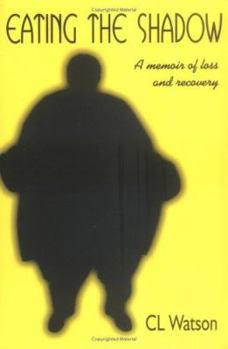
Eating the Shadow: A Memoir of Loss And Recovery

When CL Watson discovers that her brother, Carter, has topped 400 pounds and can no longer bathe himself, she decides to do something to save him. By turns hilarious, insightful, and moving, CL's true... This description may be from another edition of this product.
Format:Paperback
Language:English
ISBN:0977395103
ISBN13:9780977395101
Release Date:September 2006
Publisher:Fenn Books & Media
Length:247 Pages
Weight:0.90 lbs.
Dimensions:9.0" x 1.0" x 6.3"
Customer Reviews
4 ratings
laughter and tears
Published by Thriftbooks.com User , 19 years ago
The amazing thing about this memoir is that it makes you laugh as often as it makes you tear up. Authentic, caring, illuminating, it takes on the problem of the addictive personality and the family frameworks that perpetuate or help end this problem. This is a delightful, heartwarming book, which reflects and gives courage and energy to all who are struggling with life's common problems.
Compelling, Honest, Revealing
Published by Thriftbooks.com User , 19 years ago
A compelling and honest portrait of the effects of addiction on family members and loved ones. Watson's anguish is palpable as she writes of her many failed "plans" to help (or force) her brother to overcome his food addiction. In doing so, she does not attempt to whitewash or gloss over her own insecurities and shortcomings. She shares intimately with the reader and there is a feeling that you really know the author and her brother. Her easy-to-read and self-revealing prose makes the book hard to put down.
Eating the Shadow
Published by Thriftbooks.com User , 19 years ago
What a wonderful rendition of a tragic life experience. CL's amazing writing style catches you at the very first, pulling you through her desparate attempts to save her brother. To read through the whole ordeal from her perspective was at once humourous and heart-wrenching. I believe every person who has loved someone who has lost themselves to addiction, any kind of addiction, needs to read this account if only to understand their own futile attempts to save anyone except themselves. Life can be a harsh teacher, but the gifts we receive if we always choose love are immeasurable. I am truly grateful for CL's story and hope it helps millions of people.
Profoundly Moving and Engaging
Published by Thriftbooks.com User , 19 years ago
The epidemic of obesity in the developed world threatens to lower life expectancy and add yet more burdens to already strained health care systems around the world. Like many others who don't suffer from weight problems or food issues, I find it hard not to think that people who eat too much and exercise have only themselves to blame, even though it's clear that obesity is, like alcoholism, an addiction, requiring a holistic, multilayered therapeutic response rather than moralizing or finger-wagging. The pressures and difficulties of food addiction were brought home to me by Eating the Shadow. The book tells the story of author CL Watson's brother, Carter, who turned from being a chubby kid into being a 400-pound invalid, and how his mother, siblings (raised with an alcoholic father), and friends tried to help this man who found it hard to accept his condition or the advice of others. Ultimately, tragically, they fail, and Carter dies from complications stemming from obesity. In the meantime, however, we get startling, funny, moving and heartfelt insights into a family struggling with the patterns of addiction and denial, and of the power of food and sugar to smother every raw and necessarily painful emotion. Meanwhile, the extended family is forced to deal with the schizophrenia of one of Carter's niece's, another nephew's night terrors, and financial difficulties that bring home the sheer cost (both emotional and financial) that weigh upon a family when there is dysfunction and illness at its heart. The moral of Eating the Shadow is that it is possible to intervene in the addictive process (whatever that addiction might be) and stop your loved one from dying, but that it has to be done early, and massively, and with total family support. It remains true of this, as everything else, that while the addict must first recognize that they have a problem, their road to recovery cannot be walked in isolation and that, ultimately, it is about us and our relationships with each other rather than our relationship with food.
Copyright © 2026 Thriftbooks.com Terms of Use
| Privacy Policy | Do Not
Sell/Share My Personal Information | Cookie Policy | Cookie Preferences | Accessibility Statement
ThriftBooks® and the ThriftBooks® logo are registered trademarks of Thrift Books Global, LLC
ThriftBooks® and the ThriftBooks® logo are registered trademarks of Thrift Books Global, LLC
