


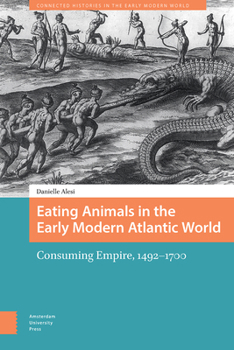
Eating Animals in the Early Modern Atlantic World: Consuming Empire, 1492-1700
No Customer Reviews

This book examines how the perceived edibility of animals evolved during the colonization of the Americas. Early European colonizers ate a variety of animals in the Americas, motivated by factors like curiosity, starvation, and diplomacy.
Format:Hardcover
Language:English
ISBN:9048560179
ISBN13:9789048560172
Release Date:August 2025
Publisher:Routledge
Length:156 Pages
Weight:0.92 lbs.
Dimensions:0.6" x 6.4" x 9.4"
Related Subjects
HistoryCustomer Reviews
0 rating
Copyright © 2026 Thriftbooks.com
Terms of Use | Privacy Policy | Do Not Sell/Share My Personal Information | Cookie Policy | Cookie Preferences | Accessibility Statement
ThriftBooks ® and the ThriftBooks ® logo are registered trademarks of Thrift Books Global, LLC
ThriftBooks ® and the ThriftBooks ® logo are registered trademarks of Thrift Books Global, LLC
