


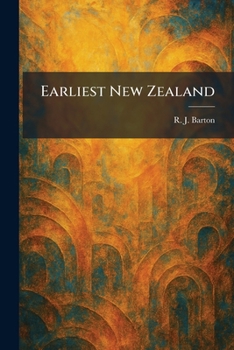
Earliest New Zealand

"Earliest New Zealand" offers a compelling look at the foundational years of a nation, capturing the raw and transformative period of early settlement and cross-cultural encounters. Written and compiled by R. J. Barton, this work serves as an essential historical record, detailing the experiences of early European pioneers and their interactions with the indigenous Maori population. Through a collection of journals, letters, and contemporary accounts, the narrative provides an intimate glimpse into the challenges of establishing a life in a remote and unfamiliar landscape.
The book delves into the social, political, and economic conditions that shaped New Zealand before its formal colonization and in the decades that followed. It explores themes of survival, adaptation, and the complex negotiations between different worldviews. From the rugged coastlines to the developing townships, the text paints a vivid picture of the maritime and terrestrial life that defined the era.
This volume is an invaluable resource for historians, genealogists, and anyone interested in the origins of New Zealand society. By preserving these early testimonies, "Earliest New Zealand" ensures that the voices of those who witnessed the birth of a modern state are not lost to time. It remains a significant contribution to Pacific studies and colonial history.
This work has been selected by scholars as being culturally important, and is part of the knowledge base of civilization as we know it. This work was reproduced from the original artifact, and remains as true to the original work as possible. Therefore, you may see the original copyright references, library stamps (as most of these works have been housed in our most important libraries around the world), and other notations in the work.
This work is in the public domain in the United States of America, and possibly other nations. Within the United States, you may freely copy and distribute this work, as no entity (individual or corporate) has a copyright on the body of the work.
As a reproduction of a historical artifact, this work may contain missing or blurred pages, poor pictures, errant marks, etc. Scholars believe, and we concur, that this work is important enough to be preserved, reproduced, and made generally available to the public. We appreciate your support of the preservation process, and thank you for being an important part of keeping this knowledge alive and relevant.
Customer Reviews
ThriftBooks ® and the ThriftBooks ® logo are registered trademarks of Thrift Books Global, LLC
