


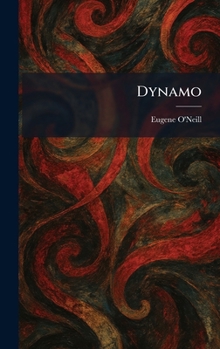
Dynamo

"Dynamo" is a powerful and provocative play by the Nobel Prize-winning dramatist Eugene O'Neill that explores the profound tension between traditional religious faith and the rising tide of modern industrialism. Set in a small Connecticut town, the drama follows Reuben Light, a young man who becomes disillusioned with the strict, puritanical Christianity of his father. His journey leads him into a fervent, obsessive worship of the electric dynamo, which he perceives as a new, all-powerful deity for the scientific age.
This expressionist work delves into the psychological disintegration of a soul caught between two worlds: the spiritual certainty of the past and the cold, mechanical reality of the future. O'Neill utilizes bold symbolism and intense emotional conflict to examine how the loss of traditional belief systems leaves a vacuum that humanity desperately tries to fill with technology. As a significant entry in O'Neill's body of work, "Dynamo" offers a haunting reflection on the search for meaning in an increasingly mechanized world, making it a vital piece for students of modern drama and American literature.
This work has been selected by scholars as being culturally important, and is part of the knowledge base of civilization as we know it. This work was reproduced from the original artifact, and remains as true to the original work as possible. Therefore, you may see the original copyright references, library stamps (as most of these works have been housed in our most important libraries around the world), and other notations in the work.
This work is in the public domain in the United States of America, and possibly other nations. Within the United States, you may freely copy and distribute this work, as no entity (individual or corporate) has a copyright on the body of the work.
As a reproduction of a historical artifact, this work may contain missing or blurred pages, poor pictures, errant marks, etc. Scholars believe, and we concur, that this work is important enough to be preserved, reproduced, and made generally available to the public. We appreciate your support of the preservation process, and thank you for being an important part of keeping this knowledge alive and relevant.
Related Subjects
DramaCustomer Reviews
ThriftBooks ® and the ThriftBooks ® logo are registered trademarks of Thrift Books Global, LLC
