


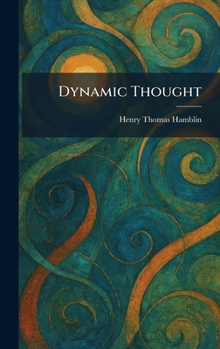
Dynamic Thought

Select Format
Select Condition 
Book Overview
"Dynamic Thought" is a profound exploration of the hidden powers within the human mind and the spiritual laws that govern personal success and well-being. Written by Henry Thomas Hamblin, a leading figure in the New Thought movement, this work serves as a comprehensive guide for individuals seeking to transform their lives through the focused application of mental and spiritual energy. The text delves into the concept of a dynamic universe where thought serves as the creative force capable of shaping one's environment and destiny.
Hamblin provides readers with practical insights into the cultivation of self-mastery, the importance of harmony with the Divine, and the realization of one's innate potential. By emphasizing the connection between the inner life and outer reality, "Dynamic Thought" offers a path toward overcoming limitations, achieving prosperity, and finding lasting peace. This classic work remains a significant contribution to the literature of self-improvement and spiritual development, appealing to anyone interested in the intersection of psychology, spirituality, and personal achievement. Through its clear and encouraging prose, the book continues to inspire those who wish to harness the power of their thoughts to create a more fulfilling and purposeful existence.
This work has been selected by scholars as being culturally important, and is part of the knowledge base of civilization as we know it. This work was reproduced from the original artifact, and remains as true to the original work as possible. Therefore, you may see the original copyright references, library stamps (as most of these works have been housed in our most important libraries around the world), and other notations in the work.
This work is in the public domain in the United States of America, and possibly other nations. Within the United States, you may freely copy and distribute this work, as no entity (individual or corporate) has a copyright on the body of the work.
As a reproduction of a historical artifact, this work may contain missing or blurred pages, poor pictures, errant marks, etc. Scholars believe, and we concur, that this work is important enough to be preserved, reproduced, and made generally available to the public. We appreciate your support of the preservation process, and thank you for being an important part of keeping this knowledge alive and relevant.
Customer Reviews
ThriftBooks ® and the ThriftBooks ® logo are registered trademarks of Thrift Books Global, LLC
