


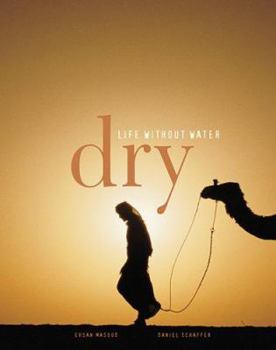
Dry: Life Without Water


This text tells the stories about people in very hot, very cold, or very high places, who spend their lives collecting, chasing, piping & trapping the water. It includes a gazetteer with eco-tourism & travel information, organisations & charities to further awareness of an array of life carried on the dry lands of earth.
Format:Hardcover
Language:English
ISBN:0674022246
ISBN13:9780674022249
Release Date:May 2006
Publisher:Harvard University Press
Length:192 Pages
Weight:1.80 lbs.
Dimensions:10.0" x 0.8" x 7.8"
Customer Reviews
1 rating
Bridging tradition and technology
Published by Thriftbooks.com User , 17 years ago
(3.5 stars) Almost every day we read about some water crises somewhere in the world: in some African country where populations suffering due to poverty and drought or on impending water "wars" due to climate change. A book that attempts to illustrate how people have been coping, in different ways, with a modicum of water in the dry regions of the world is important; the intentions of the editors of this compilation highly commendable. Water is vital to human survival and compensating for its scarcity complex with ramifications far beyond the more than one billion people already directly affected by it. The objectives of the sixteen project or country essays in this book are to convey to a wider general audience concrete findings from many years of research analysis into real-life experiences in diverse environments around the globe and share the lessons that can be drawn from these for comparable situation elsewhere and for the future. The accounts, written by different science journalists and writers with varied professional and ethnic backgrounds, vary in quality, focus and depth of the case presented. Some highlight the resilience and ingenuity of local communities without ignoring the sometimes massive obstacles faced by them, others describe more technical solutions brought to a village or region by external experts and financial sources. In several examples, such as in Namibia or the Thar desert in Pakistan, the land is so dry and resources so scarce that one can only wonder why and how people can survive in these environments. While all interesting stories in their own right, some essays focus on specific scenarios that have little to do with the specific realities of dryland living, thus leading the reader to easily forget the wider and difficult context in which these communities are functioning and why. Nonetheless, people have lived in the earth's drylands for thousands of years: rich cultures and diverse ecosystems are ample proof that continued existence in such regions has been sustainable for long periods of time. Several of our major food crops originate in dry regions and the rich biological diversity of these areas has been a vital source for food, medicines and more. While in many arid and semi-arid regions threats to the livelihood of animals and human beings have been cyclical or permanent, modern life styles, urbanization, commercial large scale agriculture have further undermined the survival chances of the peoples in the drylands. These modern challenges to living in such environments are hardly touched upon in this collection of essays. On the other hand, traditional pastoralists' way of life, such as exemplified by the Maasai in Kenya, and their contribution to ecosystem survival is not given the full credit it deserves. The editors state in the introduction that they learned six lessons through the selection process for the stories in the collection (in that order): follow the money; tradition and modernity;
Copyright © 2026 Thriftbooks.com Terms of Use
| Privacy Policy | Do Not
Sell/Share My Personal Information | Cookie Policy | Cookie Preferences | Accessibility Statement
ThriftBooks® and the ThriftBooks® logo are registered trademarks of Thrift Books Global, LLC
ThriftBooks® and the ThriftBooks® logo are registered trademarks of Thrift Books Global, LLC
