


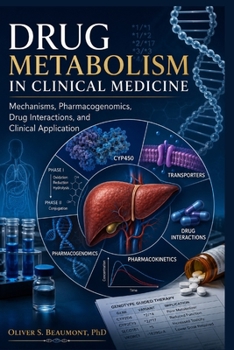
Drug Metabolism in Clinical Medicine

Select Format
Select Condition 
Book Overview
Drug metabolism is a fundamental discipline in pharmacology and pharmaceutical sciences, providing essential insights into how the human body transforms medicines, regulates drug exposure, and influences therapeutic outcomes. A thorough understanding of drug biotransformation is critical to the study of drug efficacy, toxicity, interactions, and individualized treatment.
Drug Metabolism: Principles, Enzymatic Pathways, Pharmacokinetics, and Clinical Applications is an academic textbook that explores the biochemical mechanisms, enzymatic systems, and physiological processes responsible for the metabolism of therapeutic agents and other xenobiotics. It presents the scientific foundations of drug metabolism while examining their relevance to pharmacokinetics, clinical pharmacology, toxicology, and pharmaceutical drug development.
The textbook examines the major phases of drug metabolism, including Phase I reactions such as oxidation, reduction, and hydrolysis, alongside Phase II conjugation pathways. It explores the structure and function of cytochrome P450 enzymes, the role of transferases and other metabolic enzymes, and the factors that influence metabolic activity across different tissues and organ systems. Particular attention is given to hepatic metabolism, intestinal metabolism, first-pass effects, metabolite formation, and the relationship between metabolic processes and drug elimination.
Beyond biochemical principles, this textbook investigates enzyme induction and inhibition, drug-drug interactions, pharmacogenetic variability, age-related differences, impaired liver function, and the formation of potentially toxic metabolites. It also considers the clinical significance of prodrugs, active metabolites, metabolic clearance, and the contribution of drug metabolism to therapeutic response and adverse drug reactions. These topics establish a foundation for understanding how individual characteristics and physiological conditions influence drug disposition and treatment outcomes.
Designed for students and educators in pharmacology, pharmacy, medicine, biomedical sciences, and related disciplines, this textbook provides a structured framework for understanding the mechanisms and clinical implications of drug metabolism. It is also a useful academic reference for researchers and healthcare professionals seeking to strengthen their knowledge of drug biotransformation and its applications in contemporary pharmaceutical science.
By integrating biochemical mechanisms with pharmacokinetic principles and clinical considerations, Drug Metabolism offers a comprehensive foundation for studying the processes that shape the safety, efficacy, and disposition of medicines. It supports the development of scientific reasoning and a deeper appreciation of the role of drug metabolism in rational therapeutics, personalized medicine, and evidence-based clinical practice.
Customer Reviews
ThriftBooks ® and the ThriftBooks ® logo are registered trademarks of Thrift Books Global, LLC
