
Skip to content
Scan a barcode
Scan
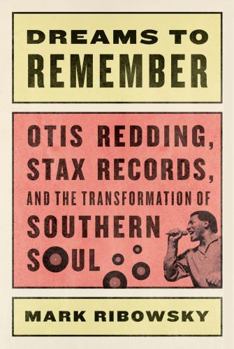
Hardcover Dreams to Remember: Otis Redding, Stax Records, and the Transformation of Southern Soul Book

ISBN: 0871408732

ISBN13: 9780871408730

Dreams to Remember: Otis Redding, Stax Records, and the Transformation of Southern Soul

Select Format

Select Condition ThriftBooks Help Icon

Recommended

Format: Hardcover

Condition: Good*

*Best Available: (ex-library)

$5.99
Save $21.96!
List Price $27.95
Almost Gone, Only 2 Left!
Save to List

Book Overview

When he died in one of rock's string of tragic plane crashes, Otis Redding was only twenty-six, yet already the avatar of a new kind of soul music. The beating heart of Memphis-based Stax Records, he had risen to fame belting out gospel-flecked blues in stage performances that seemed to ignite not only a room but an entire generation. If Berry Gordy's black-owned kingdom in Motown showed the way in soul music, Redding made his own way, going where not even his two role models who had preceded him out of Macon, Georgia--Little Richard and James Brown--had gone.

Now, in this transformative work, New York Times Notable Book author Mark Ribowsky contextualizes his subject's short career within the larger cultural and social movements of the era, tracing the crooner's rise from preacher's son to a preacher of three-minute soul sermons. And what a quick rise it was. At the tender age of twenty-one, Redding needed only a single unscheduled performance to earn a record deal, his voice so "utterly unique" (Atlantic) that it catapulted him on a path to stardom and turned a Memphis theater-turned-studio into a music mecca. Soon he was playing at sold-out venues across the world, from Finsbury Park in London to his ultimate conquest, the 1967 Monterrey Pop Festival in California, where he finally won over the flower-power crowd.

Still, Redding was not always the affable, big-hearted man's man the PR material painted him to be. Based on numerous new interviews and prodigious research, Dreams to Remember reintroduces an incredibly talented yet impulsive man, one who once even risked his career by shooting a man in the leg. But that temperament masked a deep vulnerability that was only exacerbated by an industry that refused him a Grammy until he was in his grave--even as he shaped the other Stax soul men around him, like Wilson Pickett, Sam and Dave, and Booker T. and The MG's.

As a result, this requiem is one of great conquest but also grand tragedy: a soul king of truth, a mortal man with an immortal voice and a pain in his heart. Now he, and the forces that shaped his incomparable sound, are reclaimed, giving us a panoramic of an American original who would come to define an entire era, yet only wanted what all men deserve--a modicum of respect and a place to watch the ships roll in and away again.

Customer Reviews

1 rating

So badly written I quit by page 9

Mr. Ribowsky wants the reader, /desperately/ wants the reader, to know three things. He knows many big words. He is a very cool, hip cat. Otis Redding, as composer, producer and performer, was a musical genius and a musical giant, certainly the greatest of the 1960's, possibly of all time. By page xix of the introduction Mr. Ribowsky has employed the words threnody, peroration, cognoscenti, doyen, and cynosure. When I have to pull down my Webster's three times in nine pages (threnody, peroration, and cynosure) the flow of the narrative has been lost. Cognoscenti and doyen are just bloviation. "Self-appointed elite" and "dean" would have better choices, given ... Mr. Ribowsky will abruptly insert "street lingo" into his big word grandstanding. "Guaranteed: you ain't never heard" is thrust in between "their sonic resonance" and "the cultural hurdles", for instance. All within a span of less than one hundred words. But most annoying, Mr. Ribowsky's characterization of Mr. Redding's work fawns to the point of nausea: "[...composer of the] two songs [which] might very well reveal everything there is to know about the nature and meaning of [the 1960s]." "[The songs 'Respect' and 'Dock of the Bay'] helped seed social change." "Redding - simply the most overpowering and electrifying soul stage performer of his time." "[Redding] became the nerve and conscience of soul music." And those four examples are all in THE FIRST TWO PAGES of the introduction! Believe me, it goes onnnnnnnnnnn from there. Additionally Mr. Ribowsky's story is not helped by his overbearing use of superlatives. Everything is "greatest", "brilliant", "global", "cosmic", "idyllic", "ultra-sensuous", and so on. It produces the reading equivalent of listening to an unrelenting carnival barker. Mr. Ribowsky might have something worthwhile to say. Mr. Ribowsky might have insights and revelations of immense value. But if so, I will never know. Because Mr. Ribowsky has buried his message in an avalanche of vanity and overselling. With whatever time you have to read each week, I'd suggest spending it elsewhere.
Copyright © 2026 Thriftbooks.com Terms of Use | Privacy Policy | Do Not Sell/Share My Personal Information | Cookie Notice | Cookie Preferences | Accessibility Statement
ThriftBooks ® and the ThriftBooks ® logo are registered trademarks of Thrift Books Global, LLC

GoDaddy Verified and Secured