


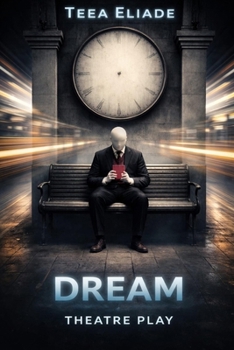
Dream: Theatre play

Plato famously described a group of people chained inside a cave, forced to watch shadows cast on a wall by a fire behind them. These shadows, he argued, are mistaken for reality. When one of them is freed and leaves the cave, he encounters the true world outside. Having seen the light, Plato assumes that such a person could never sincerely return to the cave, except perhaps to enlighten the others. This assumption rests on a fundamental belief: that truth, once recognised, is irreversible. That knowledge liberates by its very nature. Dream begins precisely where this belief becomes fragile: in the psyche of a human being.The play does not deny Plato's image, nor does it parody it. Instead, it questions a premise rarely examined: the idea that humans inevitably prefer truth to structure, freedom to belonging, or insight to safety. Plato speaks from the perspective of the philosopher - a figure already inclined toward abstraction, solitude, and the discomfort of thinking against appearances. Dream asks what happens with a human being, any human being. What if the cave is not only a prison, but also a system of meaning? What if the shadows are not merely deceptions, but shared references that allow communication, recognition, and order? What if leaving the cave means not only seeing more, but losing language, roles, and the reassurance of being understood? What if the human being is not primarily a seeker of truth, but a creature of habit, fear, longing, and emotional survival? In Dream, awakening is not portrayed as a moment of triumph, but as an unstable state. Light does not arrive as salvation; it arrives as disturbance. The question is not whether freedom exists, but whether it is desirable once it ceases to resemble hope. The work is motivated by a quiet contradiction to Plato's conclusion: that many would, in fact, return to the cave. Not because they fail to recognise truth, but because truth demands a cost they are unwilling - or unable - to pay. Freedom here is not denied; it is postponed, rationalised, reframed as illusion, dream, or madness. Dream explores this hesitation. It stages a consciousness that repeatedly approaches insight, only to retreat into interpretation, habit, or self-soothing narratives. The prison is not locked. The chains are real, yet strangely negotiable. What remains closed is the decision to accept the consequences of seeing clearly. Rather than opposing dream and reality, the play exposes how both can function as shelters. In this sense, Dream is not a rejection of Plato, but a response to him: a work that shifts the focus from enlightenment as destiny to enlightenment as burden. The play suggests that the tragedy of modern consciousness is not ignorance, but ambivalence - not blindness, but the persistent temptation to return to the shadows, even after recognising the fire.
Customer Reviews
ThriftBooks ® and the ThriftBooks ® logo are registered trademarks of Thrift Books Global, LLC
