


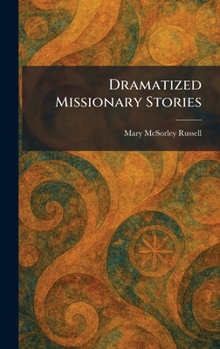
Dramatized Missionary Stories

"Dramatized Missionary Stories" is a practical collection of short plays and dramatic sketches designed to bring the experiences of Christian missionaries to life for congregations and students. Compiled by Mary M. Russell, this work offers a series of engaging narratives that explore the challenges, triumphs, and daily realities of mission work across various global contexts. The volume serves as a valuable resource for religious educators, youth leaders, and church groups seeking to inspire their members through the power of performance and storytelling.
Each dramatization is crafted to be accessible and easily staged, requiring minimal equipment while maximizing emotional and spiritual impact. By transforming traditional missionary reports into dynamic scenes, Russell provides a unique pedagogical tool that emphasizes the human element of global outreach. These stories not only highlight the dedication of those serving in the field but also encourage a deeper understanding of the diverse cultures and communities they serve. This collection remains a significant historical example of early 20th-century religious education and the creative methods used to foster missionary zeal and empathy within the church community.
This work has been selected by scholars as being culturally important, and is part of the knowledge base of civilization as we know it. This work was reproduced from the original artifact, and remains as true to the original work as possible. Therefore, you may see the original copyright references, library stamps (as most of these works have been housed in our most important libraries around the world), and other notations in the work.
This work is in the public domain in the United States of America, and possibly other nations. Within the United States, you may freely copy and distribute this work, as no entity (individual or corporate) has a copyright on the body of the work.
As a reproduction of a historical artifact, this work may contain missing or blurred pages, poor pictures, errant marks, etc. Scholars believe, and we concur, that this work is important enough to be preserved, reproduced, and made generally available to the public. We appreciate your support of the preservation process, and thank you for being an important part of keeping this knowledge alive and relevant.
Customer Reviews
ThriftBooks ® and the ThriftBooks ® logo are registered trademarks of Thrift Books Global, LLC
