


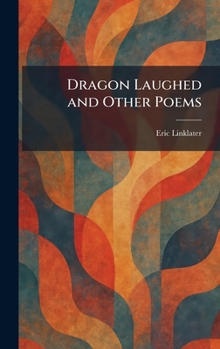
Dragon Laughed and Other Poems

"Dragon Laughed and Other Poems" is an evocative collection of verse by the celebrated Scottish author Eric Linklater. Written during a prolific period in Linklater's career, this volume showcases his mastery of language, rhythm, and wit. The poems within range from lyrical explorations of nature and the human condition to more satirical and narrative pieces that reflect the author's keen observation of society and history.
In this collection, Linklater blends a distinctively Scottish sensibility with broader modernist influences, creating a body of work that is both grounded in tradition and innovative in its execution. The imagery is rich and often playful, as suggested by the whimsical title poem, while other entries delve into deeper philosophical and emotional territory. This work highlights Linklater's versatility as a writer, proving that his literary talents extended far beyond the prose for which he is most widely known.
Readers of 20th-century poetry will find much to admire in the technical precision and imaginative breadth of these poems. "Dragon Laughed and Other Poems" remains a significant contribution to the Scottish literary landscape, offering a window into the intellectual and creative currents of the early 1930s.
This work has been selected by scholars as being culturally important, and is part of the knowledge base of civilization as we know it. This work was reproduced from the original artifact, and remains as true to the original work as possible. Therefore, you may see the original copyright references, library stamps (as most of these works have been housed in our most important libraries around the world), and other notations in the work.
This work is in the public domain in the United States of America, and possibly other nations. Within the United States, you may freely copy and distribute this work, as no entity (individual or corporate) has a copyright on the body of the work.
As a reproduction of a historical artifact, this work may contain missing or blurred pages, poor pictures, errant marks, etc. Scholars believe, and we concur, that this work is important enough to be preserved, reproduced, and made generally available to the public. We appreciate your support of the preservation process, and thank you for being an important part of keeping this knowledge alive and relevant.
Related Subjects
PoetryCustomer Reviews
ThriftBooks ® and the ThriftBooks ® logo are registered trademarks of Thrift Books Global, LLC
