


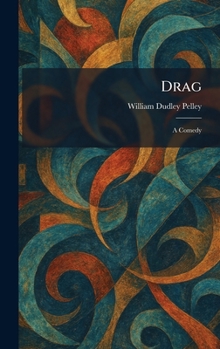
Drag: A Comedy

"Drag: A Comedy" is a sparkling and insightful piece of early 20th-century social satire that explores the humorous yet poignant frustrations of domestic life. The narrative follows David Higgins, a young man brimming with potential and ambition, who finds his upward mobility constantly tethered by the "drag" of his extended family and demanding in-laws. As David attempts to navigate the professional world and secure his own future, he is forced to contend with a colorful cast of relatives whose financial and emotional demands threaten to sink his every endeavor.
Written with a keen eye for human foibles, this work captures the tensions between individual aspiration and the suffocating weight of familial responsibility. Pelley's prose is both witty and observational, offering a satirical look at small-town dynamics and the often-absurd expectations of the marriage bond. "Drag: A Comedy" remains a compelling study of character and social pressure, highlighting the timeless struggle to carve out a personal identity while remaining anchored to one's roots. This novel is a classic example of American humor and character-driven storytelling from the 1920s.
This work has been selected by scholars as being culturally important, and is part of the knowledge base of civilization as we know it. This work was reproduced from the original artifact, and remains as true to the original work as possible. Therefore, you may see the original copyright references, library stamps (as most of these works have been housed in our most important libraries around the world), and other notations in the work.
This work is in the public domain in the United States of America, and possibly other nations. Within the United States, you may freely copy and distribute this work, as no entity (individual or corporate) has a copyright on the body of the work.
As a reproduction of a historical artifact, this work may contain missing or blurred pages, poor pictures, errant marks, etc. Scholars believe, and we concur, that this work is important enough to be preserved, reproduced, and made generally available to the public. We appreciate your support of the preservation process, and thank you for being an important part of keeping this knowledge alive and relevant.
Customer Reviews
ThriftBooks ® and the ThriftBooks ® logo are registered trademarks of Thrift Books Global, LLC
