




Select Format
Select Condition 
Book Overview
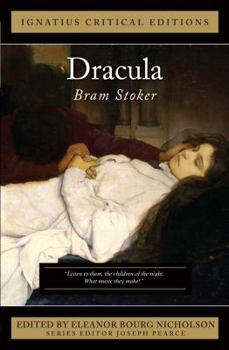
When solicitor's clerk Jonathan Harker travels to Transylvania on business to meet a mysterious Romanian count named Dracula, he little expects the horrors this strange meeting will unleash. Thus Bram Stoker's 1897 novel of blood and passion begins, rapidly accelerating from Harker's nightmarish experiences in Castle Dracula to a full-fledged vampiric assault on late-Victorian London itself. The story, narrated through a collection of documents-primarily journal entries and letters-chronicles the desperate efforts of a band of gentlemen to protect the virtue of their ladies and lay to rest the ancient threat once and for all.
Often vacillating wildly between the terrible and the comic, Dracula at the same time brings to life a host of compelling themes: tensions between antiquity and modernity; the powers and limitations of technology; the critical importance of feminine virtue; the difference between superstition and religion; the nature of evil; and, perhaps most compellingly, the complex relationship between ancient faith and scientific enlightenment. More vivid than any of its varied film adaptations, and over a century after its first publication, Dracula still retains its sharp bite.
Customer Reviews
Fake and falsely printed!! Do not buy.
I like it.
The book itself is great...but I am annoyed by the fake sticker on the back that can't be removed.
Be careful what you order
"For the dead travel fast."
It was okay.
Stunning book
Long, overly detailed, and with a deeply unsatisfying ending, I can’t recommend it
Refreshing twist on Dracula
Boy! They were prolific journalers and diarists!
The vampire novel!
An Open Door For The Curious Mind
Dracula Mentions in Our Blog
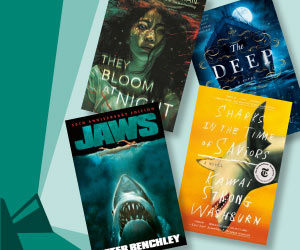
As we move into autumn, many readers are drawn to books with a chilling quality. Our newest survey, conducted by Talker Research and commissioned by Thriftbooks, investigated all things related to the spooky genre and what we found turned into a riveting tale. Here are some of our most arresting findings.
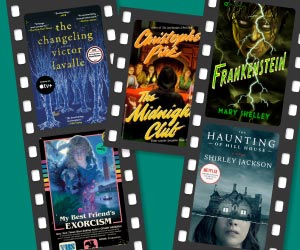
It's almost October! And that means it's time to double down on book-to-screen horror—meaning read the books and watch the adaptations. Here are seventeen frightfully good horror novels that have been adapted to the screen.
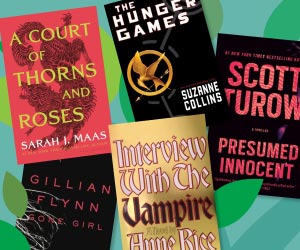
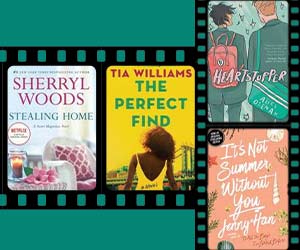
It's always fun to see our favorite books on the screen. But sometimes, the best literature gets adapted before we've had the chance to read it. Here's the latest, greatest in book-to-screen adaptations. Order your copy of the source material so you can read before you watch.
ThriftBooks ® and the ThriftBooks ® logo are registered trademarks of Thrift Books Global, LLC
