


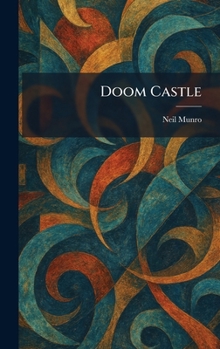
Doom Castle

Select Format
Select Condition 
Book Overview
"Doom Castle" is a gripping historical romance set against the atmospheric backdrop of the 18th-century Scottish Highlands. The narrative follows Count Victor de Montaiglon, a French aristocrat who travels to a remote and crumbling island fortress on the coast of Argyll. His mission is to track down a treacherous individual who has betrayed the Jacobite cause, but he soon finds himself entangled in a web of mystery, political intrigue, and unexpected passion.
The novel masterfully captures the transition between the old Highland ways and the encroaching modern world. Neil Munro's evocative prose brings the rugged landscape and the brooding atmosphere of the castle to life, creating a sense of isolation and suspense. As Montaiglon navigates the complex loyalties of the castle's inhabitants, including the melancholic Baron of Doom and his spirited daughter, readers are treated to a tale of honor, deceit, and the enduring power of love. "Doom Castle" stands as a classic example of Scottish historical fiction, blending adventure with a deep sense of place and character.
This work has been selected by scholars as being culturally important, and is part of the knowledge base of civilization as we know it. This work was reproduced from the original artifact, and remains as true to the original work as possible. Therefore, you may see the original copyright references, library stamps (as most of these works have been housed in our most important libraries around the world), and other notations in the work.
This work is in the public domain in the United States of America, and possibly other nations. Within the United States, you may freely copy and distribute this work, as no entity (individual or corporate) has a copyright on the body of the work.
As a reproduction of a historical artifact, this work may contain missing or blurred pages, poor pictures, errant marks, etc. Scholars believe, and we concur, that this work is important enough to be preserved, reproduced, and made generally available to the public. We appreciate your support of the preservation process, and thank you for being an important part of keeping this knowledge alive and relevant.
Customer Reviews
ThriftBooks ® and the ThriftBooks ® logo are registered trademarks of Thrift Books Global, LLC
