


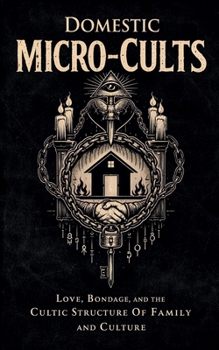
Domestic Micro-Cults

Domestic Micro-Cults argues that "cult" is not a fringe category reserved for exotic sects, but a portable structure of allegiance that can emerge inside ordinary families and romantic relationships. When belonging becomes conditional, authority monopolizes interpretation, and exit carries punishment, intimacy shifts from coordination to governance.
Through a mechanism-based framework-loyalty extraction, epistemic control, and exit-cost inflation-the book maps how households can function as high-control systems. It introduces a role typology (Children of the Cult, Leaders of the Cult, Enemies of the Cult), analyzes gaslighting as an epistemic technology of captivity without bars, and links domestic control to broader cultural and institutional norms that normalize rule acceptance.
The book ultimately advances a practical alternative: bounded interdependence. True belonging is not self-erasure. It is connection with autonomy, plural support, and the freedom to dissent without annihilation.
Related Subjects
Parenting & RelationshipsCustomer Reviews
ThriftBooks ® and the ThriftBooks ® logo are registered trademarks of Thrift Books Global, LLC
