


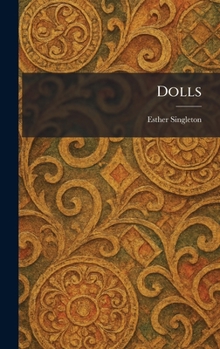
Dolls

"Dolls" is an extensive and beautifully detailed exploration of the history and evolution of one of the world's most enduring objects. Written by the prolific author Esther Singleton, this work serves as a comprehensive guide for collectors, historians, and enthusiasts alike, tracing the development of the doll from its earliest ritualistic origins to its status as a beloved toy and sophisticated collectible.
The work examines the artistic craftsmanship and cultural significance of dolls across various eras and regions. Singleton provides a meticulous look at the materials used in their creation-ranging from primitive wood and clay to delicate wax, bisque, and porcelain. Through her descriptive prose, readers are introduced to the various roles dolls have played in society, whether as fashion plates used to transmit the latest European trends, educational tools for children, or masterpieces of miniature art.
Beyond the figures themselves, "Dolls" also explores the world of dollhouses, accessories, and the historical context of the toy industry. By documenting the nuances of doll-making and the changing aesthetics of childhood, Singleton offers a unique perspective on social history and the decorative arts. This book remains an essential reference for understanding the charm and complexity of these miniature human forms and their lasting impact on global culture.
This work has been selected by scholars as being culturally important, and is part of the knowledge base of civilization as we know it. This work was reproduced from the original artifact, and remains as true to the original work as possible. Therefore, you may see the original copyright references, library stamps (as most of these works have been housed in our most important libraries around the world), and other notations in the work.
This work is in the public domain in the United States of America, and possibly other nations. Within the United States, you may freely copy and distribute this work, as no entity (individual or corporate) has a copyright on the body of the work.
As a reproduction of a historical artifact, this work may contain missing or blurred pages, poor pictures, errant marks, etc. Scholars believe, and we concur, that this work is important enough to be preserved, reproduced, and made generally available to the public. We appreciate your support of the preservation process, and thank you for being an important part of keeping this knowledge alive and relevant.
Customer Reviews
ThriftBooks ® and the ThriftBooks ® logo are registered trademarks of Thrift Books Global, LLC
