


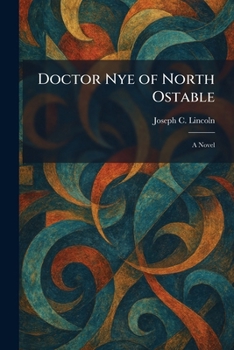
Doctor Nye of North Ostable

Select Format
Select Condition 
Book Overview
"Doctor Nye of North Ostable: A Novel" is a compelling work of fiction by Joseph C. Lincoln that captures the essence of early 20th-century New England life. The story follows Ephraim Nye, a local physician who returns to the village of North Ostable after years of absence following a public scandal that tarnished his reputation. Faced with the cold shoulders and lingering prejudices of his former neighbors, Dr. Nye must navigate the intricate social landscape of a tight-knit community to clear his name and reclaim his place in society.
Lincoln's narrative is rich with the local color and dry humor for which he is celebrated, painting a vivid portrait of Cape Cod personalities and small-town dynamics. As the doctor treats the physical ailments of the townspeople, he also confronts the moral and emotional wounds of the past. The novel explores themes of forgiveness, resilience, and the power of truth in the face of gossip and tradition. "Doctor Nye of North Ostable: A Novel" remains a heartwarming and insightful exploration of human nature, making it an enduring classic of American regional literature. Readers will find themselves drawn into the quiet drama and eventual triumphs of a man determined to restore his honor and serve his community once again.
This work has been selected by scholars as being culturally important, and is part of the knowledge base of civilization as we know it. This work was reproduced from the original artifact, and remains as true to the original work as possible. Therefore, you may see the original copyright references, library stamps (as most of these works have been housed in our most important libraries around the world), and other notations in the work.
This work is in the public domain in the United States of America, and possibly other nations. Within the United States, you may freely copy and distribute this work, as no entity (individual or corporate) has a copyright on the body of the work.
As a reproduction of a historical artifact, this work may contain missing or blurred pages, poor pictures, errant marks, etc. Scholars believe, and we concur, that this work is important enough to be preserved, reproduced, and made generally available to the public. We appreciate your support of the preservation process, and thank you for being an important part of keeping this knowledge alive and relevant.
Customer Reviews
ThriftBooks ® and the ThriftBooks ® logo are registered trademarks of Thrift Books Global, LLC
