


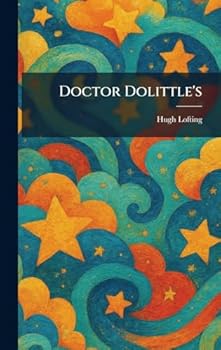
Doctor Dolittle's

"Doctor Dolittle's" continues the enchanting adventures of the world-famous physician who discovered the secret of speaking to animals. Created by Hugh Lofting, this classic work follows the eccentric John Dolittle of Puddleby-on-the-Marsh as he delves deeper into the mysteries of the natural world. Accompanied by his loyal animal companions, including the parrot Polynesia and the dog Jip, the doctor expands his horizons beyond traditional medicine to explore the complex lives of insects and the wonders found within his own backyard.
This volume captures the whimsical imagination and gentle humanitarianism that defined Lofting's storytelling. Through Dolittle's patient observations and extraordinary linguistic abilities, readers are invited into a world where every creature has a story to tell. The narrative emphasizes themes of empathy, scientific curiosity, and the profound connection between humans and the animal kingdom. As a cornerstone of early 20th-century children's literature, the story remains a celebrated example of fantasy and adventure that encourages a deeper respect for all living things.
This work has been selected by scholars as being culturally important, and is part of the knowledge base of civilization as we know it. This work was reproduced from the original artifact, and remains as true to the original work as possible. Therefore, you may see the original copyright references, library stamps (as most of these works have been housed in our most important libraries around the world), and other notations in the work.
This work is in the public domain in the United States of America, and possibly other nations. Within the United States, you may freely copy and distribute this work, as no entity (individual or corporate) has a copyright on the body of the work.
As a reproduction of a historical artifact, this work may contain missing or blurred pages, poor pictures, errant marks, etc. Scholars believe, and we concur, that this work is important enough to be preserved, reproduced, and made generally available to the public. We appreciate your support of the preservation process, and thank you for being an important part of keeping this knowledge alive and relevant.
Customer Reviews
ThriftBooks ® and the ThriftBooks ® logo are registered trademarks of Thrift Books Global, LLC
