





Book Overview
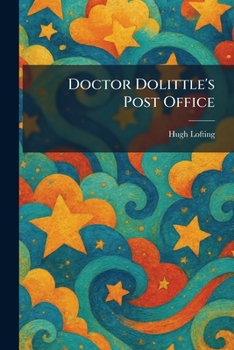
"Doctor Dolittle's Post Office" is a charming and imaginative tale in Hugh Lofting's celebrated series about the physician who possesses the extraordinary ability to speak with animals. In this installment, the kind-hearted Doctor Dolittle travels to Africa, where he discovers the inefficiencies of communication among the animal kingdom. To remedy this, he establishes the first postal service run by and for animals, known as the Swallow Mail.
This classic of children's literature follows the Doctor, his loyal dog Jip, and a cast of delightful creatures as they navigate the challenges of organizing a global mail network. From the sophisticated logistics of bird-led delivery to the humorous interactions between species, the narrative showcases Lofting's unique blend of whimsy and adventure. The story highlights themes of cooperation, empathy, and the bridging of worlds through communication.
As a cornerstone of early 20th-century fantasy, "Doctor Dolittle's Post Office" continues to captivate readers with its inventive world-building and the enduring appeal of a hero dedicated to the well-being of all living things. It remains an essential work for those who cherish timeless animal stories and the spirit of exploration.
This work has been selected by scholars as being culturally important, and is part of the knowledge base of civilization as we know it. This work was reproduced from the original artifact, and remains as true to the original work as possible. Therefore, you may see the original copyright references, library stamps (as most of these works have been housed in our most important libraries around the world), and other notations in the work.
This work is in the public domain in the United States of America, and possibly other nations. Within the United States, you may freely copy and distribute this work, as no entity (individual or corporate) has a copyright on the body of the work.
As a reproduction of a historical artifact, this work may contain missing or blurred pages, poor pictures, errant marks, etc. Scholars believe, and we concur, that this work is important enough to be preserved, reproduced, and made generally available to the public. We appreciate your support of the preservation process, and thank you for being an important part of keeping this knowledge alive and relevant.
Customer Reviews
Faster than Anything
good, although kind of a potpourri
Doctor Dolittle's Post Office
ThriftBooks ® and the ThriftBooks ® logo are registered trademarks of Thrift Books Global, LLC
