


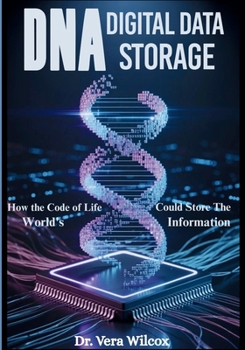
DNA Digital Data Storage: How the Code of Life Could Store the World's Information
No Customer Reviews

We're drowning in data. Could the answer be written in the code of life? By the year 2050, the world is expected to generate more digital data than our current storage systems can handle. Hard drives degrade. Cloud storage costs energy. Tapes collect dust. But one natural material has quietly stored the blueprint of life for over three billion years....DNA. In DNA Digital Data Storage: How the Code of Life Could Store the World's Information, you'll explore one of the most promising technological frontiers of our time. This book explains how scientists, engineers, and tech companies are now encoding everything from movies and photographs to official records and scientific archives into synthetic DNA molecules. This isn't science fiction. It's already happening. Inside this book, you'll learn: The science behind DNA data storage - how binary code is translated into the four DNA bases (A, T, C, G)The process of writing and reading data in DNA using synthesis and sequencing methodsWhy DNA offers unmatched advantages like ultra-high storage density, extreme longevity, and energy efficiencyReal-world examples and pilot projectsCurrent use cases ranging from archival media and museum preservation to legacy records and military interestChallenges and roadblocks, including cost, error correction, data retrieval speed, and biosecurity concernsWhat the future may hold, including commercial DNA storage services, ethical dilemmas, and how governments, industries, and consumers might adapt
Written in a clear, engaging style, this book makes the complex world of biological data storage understandable, even if you're not a scientist. Whether you're curious about emerging data technologies, exploring the future of information preservation, or just fascinated by the ways biology and computing are converging, this book offers a front-row seat to a revolution in the making. You'll also find: A glossary of key terms to reinforce understandingA timeline of key breakthroughs in DNA storageReader questions to reflect on tech, privacy, and ethicsPractical examples that show how digital files can be converted into DNA sequencesIf you're ready to discover how biology might solve one of the biggest digital challenges of our time, this book offers a clear and eye-opening guide. You'll gain a deep understanding of how DNA, nature's most efficient data system, could change the way we store, protect, and pass on information for generations to come. Ideal for: Readers interested in biotechnology, computing, or future-driven scienceProfessionals in data science, research, or digital archivingStudents and educators looking for emerging tech insightsAnyone curious about how science and technology are reshaping the digital world
This is more than a book about storing files. It's a look at the future of memory, legacy, and how humanity keeps its story alive.
GRAB A COPY NOW
Written in a clear, engaging style, this book makes the complex world of biological data storage understandable, even if you're not a scientist. Whether you're curious about emerging data technologies, exploring the future of information preservation, or just fascinated by the ways biology and computing are converging, this book offers a front-row seat to a revolution in the making. You'll also find: A glossary of key terms to reinforce understandingA timeline of key breakthroughs in DNA storageReader questions to reflect on tech, privacy, and ethicsPractical examples that show how digital files can be converted into DNA sequencesIf you're ready to discover how biology might solve one of the biggest digital challenges of our time, this book offers a clear and eye-opening guide. You'll gain a deep understanding of how DNA, nature's most efficient data system, could change the way we store, protect, and pass on information for generations to come. Ideal for: Readers interested in biotechnology, computing, or future-driven scienceProfessionals in data science, research, or digital archivingStudents and educators looking for emerging tech insightsAnyone curious about how science and technology are reshaping the digital world
This is more than a book about storing files. It's a look at the future of memory, legacy, and how humanity keeps its story alive.
GRAB A COPY NOW
Format:Paperback
Language:English
ISBN:B0FH4QQ2JF
ISBN13:9798291354537
Release Date:July 2025
Publisher:Independently Published
Length:94 Pages
Weight:0.39 lbs.
Dimensions:0.2" x 7.0" x 10.0"
Customer Reviews
0 rating
Copyright © 2026 Thriftbooks.com
Terms of Use | Privacy Policy | Do Not Sell/Share My Personal Information | Cookie Policy | Cookie Preferences | Accessibility Statement
ThriftBooks ® and the ThriftBooks ® logo are registered trademarks of Thrift Books Global, LLC
ThriftBooks ® and the ThriftBooks ® logo are registered trademarks of Thrift Books Global, LLC
