


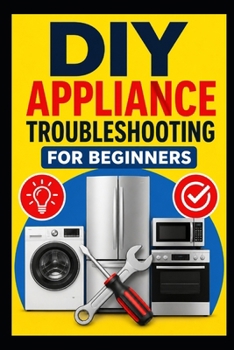
DIY Appliance Troubleshooting for Beginners: A Practical Step-by-Step Guide to Diagnosing Common Appliance Problems, Finding Faults, and Knowing What

When an appliance stops working, you don't always need to start by calling a repair technician-or replacing parts at random.
DIY Appliance Troubleshooting for Beginners teaches you a practical, step-by-step approach to figuring out what is actually wrong with common household appliances.
Written for beginners, this guide focuses on safe diagnosis before repair. You'll learn how to observe symptoms, follow the power path, understand error codes, use basic tools, and narrow down possible causes without immediately replacing expensive components.
Inside, you'll learn how to:
Think through appliance problems like a troubleshooterKnow which checks are reasonable for DIY-and when to stopBuild a useful beginner troubleshooting toolkitRead model numbers, manuals, and error codesUse visual clues, sounds, smells, and symptoms to narrow down faultsUse a multimeter safely for basic diagnostic checksUnderstand common electrical componentsTrace an appliance's power path systematicallyDiagnose appliances that are completely deadInvestigate breaker trips, intermittent faults, leaks, unusual noises, burning smells, and poor heatingAvoid blaming the control board too earlyThe book then walks through common problems with:
Washing machines - no start, no fill, no drain, no spin, leaks, noise, and vibrationDryers - no heat, slow drying, no tumbling, and unusual noisesDishwashers - starting, filling, cleaning, draining, and leaking problemsRefrigerators and freezers - poor cooling, constant running, water leaks, ice-maker issues, and uneven temperaturesElectric ovens and cooktops - no heat, incorrect temperature, and failed heating elementsMicrowaves - beginner-safe troubleshooting without exposing yourself to dangerous high voltageVacuum cleaners - weak suction and brush problemsSmall appliances - kettles, toasters, coffee makers, blenders, food processors, irons, and steam appliancesYou'll also learn how to decide whether an appliance is worth repairing, choose replacement parts more carefully, communicate effectively with a repair technician, and avoid the expensive habit of replacing parts until something finally works.
The guide finishes with a practical 15-minute troubleshooting routine, universal diagnostic checklist, and appliance maintenance and repair log you can reuse whenever another household appliance develops a problem.
You don't need to become an appliance technician.
You need a safe process for moving from "It doesn't work" to "I know what to check next."
Troubleshoot first. Replace parts second. Spend money only when the evidence points you there.
Customer Reviews
ThriftBooks ® and the ThriftBooks ® logo are registered trademarks of Thrift Books Global, LLC
