


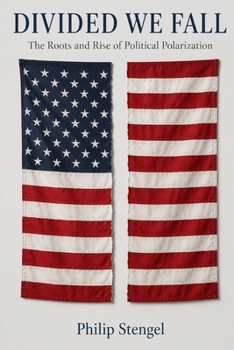
Divided We Fall: The Roots and Rise of Political Polarization

Select Format
Select Condition 
Book Overview
We are told constantly that the country is more divided than ever. We are rarely told why. Divided We Fall: The Roots and Rise of Political Polarization answers that question, and the answer is more unsettling than the usual talking points. Today's division is not a natural mood that fell over the nation by accident. It is manufactured. It is built by incentives that reward outrage, distributed by systems that profit from anger, and deepened by forces that win every time neighbors stop trusting neighbors.
The hope hidden inside that hard truth is simple. Because division was built, it can be reduced.
But first it has to be seen for what it is. Someone gains from every fight. Someone profits when a family stops speaking, when a town turns on itself, when a feed keeps a reader angry enough to keep scrolling. That machinery runs on attention, and it has learned that almost nothing holds attention like fear of the people on the other side.
Beginning in a packed school board meeting where a single town splinters into two separate realities, this book follows polarization out of the headlines and into the places it does the most damage: family dinners, workplaces, town halls, courtrooms, and the feeds we scroll before bed. It traces how a democracy built to survive disagreement became a machine for manufacturing contempt, and it does so without flattering any side. Left or right, the forces described here are working on all of us.
This is not another book that blames a single party, president, or platform. It reaches deeper, back to divisions rooted in American history and forward to the modern engines that turned old fractures into a permanent state of alarm. The goal is not to win an argument. It is to make the problem finally legible, so that something can be done about it.
Inside, you will learn:
How partisan media, social platforms, foreign interference, and corporate profit turned ordinary disagreement into permanent warfareThe real human cost of division, from estranged families to a measurable toll on mental and physical healthWhy polarization is so expensive, draining the economy through gridlock, politicized boycotts, and a workforce turned against itselfHow division paralyzes Congress, politicizes the courts, and breaks local government, where the consequences land first and hardestThe strategies, at the level of policy, community, business, and the individual, that have already lowered hostility and rebuilt trust in real communitiesOne question drives every chapter: can unity be reclaimed in a country this divided? Not unity as agreement, and not a demand that anyone surrender their convictions, but something sturdier and more necessary. Shared rules, shared facts, and the ordinary ability to disagree without treating the other side as an enemy to be destroyed.
The book closes where the country now stands, at a fork between two futures. One is a slow drift into permanent distrust, decay, and manipulation. The other is a deliberate and difficult repair. The distance between them comes down to choices made by citizens, leaders, and institutions, and these pages map exactly where those choices can still be made.
Clear-eyed, deeply researched, and stubbornly nonpartisan, Divided We Fall is both a hard diagnosis and a genuine way forward. It is written for the exhausted and the concerned, for anyone uneasy about where the noise leads and unwilling to accept that a broken, distrustful nation is simply the way things have to be from now on.
The division was never inevitable. Understand how it was built, and how it can be undone.
Customer Reviews
ThriftBooks ® and the ThriftBooks ® logo are registered trademarks of Thrift Books Global, LLC
