


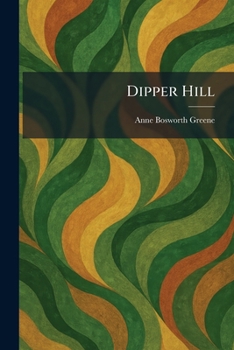
Dipper Hill

"Dipper Hill" is an evocative account of a season spent on a rugged Vermont farm, capturing the beauty and challenges of life in the Green Mountains during the summer and autumn months. Following her experiences in rural isolation, Anne Bosworth Greene return to the landscape she loves, documenting her deep connection to the land and the creatures that inhabit it. The narrative centers on the author's daily rhythms, particularly her devoted care for a herd of Shetland ponies and the meticulous cultivation of her vibrant gardens.
With lyrical prose and a keen eye for detail, Greene describes the shifting colors of the landscape, the demanding yet rewarding nature of animal husbandry, and the quiet joys of country solitude. This work stands as a classic piece of early 20th-century nature writing, offering readers a window into a pastoral reality defined by hard work and aesthetic wonder. "Dipper Hill" celebrates the resilience required for farm life while finding profound inspiration in the natural world, from the blooming of perennials to the spirited temperament of her horses. It remains a thoughtful exploration of the relationship between humans, animals, and the environment, written with warmth and a genuine appreciation for the simplicity of life away from the bustle of the city.
This work has been selected by scholars as being culturally important, and is part of the knowledge base of civilization as we know it. This work was reproduced from the original artifact, and remains as true to the original work as possible. Therefore, you may see the original copyright references, library stamps (as most of these works have been housed in our most important libraries around the world), and other notations in the work.
This work is in the public domain in the United States of America, and possibly other nations. Within the United States, you may freely copy and distribute this work, as no entity (individual or corporate) has a copyright on the body of the work.
As a reproduction of a historical artifact, this work may contain missing or blurred pages, poor pictures, errant marks, etc. Scholars believe, and we concur, that this work is important enough to be preserved, reproduced, and made generally available to the public. We appreciate your support of the preservation process, and thank you for being an important part of keeping this knowledge alive and relevant.
Customer Reviews
ThriftBooks ® and the ThriftBooks ® logo are registered trademarks of Thrift Books Global, LLC
