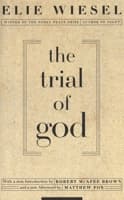
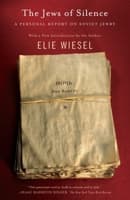
Elie Wiesel, Lucy Dawidowicz, Dorothy Rabinowitz, and Robert McAfee Brown explore society's inability to comprehend the horrors of the Holocaust, and its unwillingness to remember. Annotated by Elliot Lefkovitz, educational consultant for the Holocaust Memorial Foundation of Illinois, this edition contains extensive documentation of ideas and facts that have surfaced since the book's first appearance in 1977.
Since his unprecedented memoir Night woke up the world to the atrocities of the Holocaust in 1958, Nobel laureate Elie Wiesel has dedicated his days to turning his survival story from one of horror to one of hope. From several works inspired by his experience to his insightful reflections in After the Darkness , Wiesel s work serves to both admonish and inspire.
This book is a collection of four lectures delivered at Northwestern Univeristy in 1977. It takes four different approaches to the Holocaust: The Holocaust as literay inspirartion, as history, as living memory, and as a problem in moral choice. Elie Wiesel's lecture, like his novels, is very poetic and gripping--however, he doesn't really say very much, instead, he asks a great many "why" questions--which is perhaps all anyone can do. The lectures of Lucy Dawidowicz and Dorothy Rabinowitz are interesting in that they reveal the depth and breadth of the historical and personal record of the Holocaust as well as the extreme importance to the Jews of recording and remembering. Robert McAfee Brown confronts the difficult issue of potential Christian complicity in the Holocaust and the great question of theodicy--how can we believe in God after the Holocaust? He also provides some good analysis of Elie Wiesel's novels, which he sees as a pilgramage.