


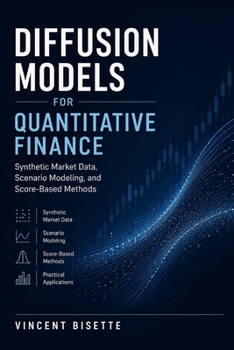
Diffusion Models for Quantitative Finance: Synthetic Market Data, Scenario Modeling, and Score-Based Methods: A Comprehensive Guide

Diffusion models are reshaping how researchers and practitioners approach synthetic data, generative modeling, and complex scenario design. Diffusion Models for Quantitative Finance provides a practical introduction to applying diffusion-based methods within financial modeling, with a focus on synthetic market data, scenario generation, and score-based machine learning techniques.
This book explains how diffusion models work, why they matter, and how they can be adapted for quantitative finance problems involving noisy time series, market simulations, volatility structures, and probabilistic scenario analysis. Rather than presenting generative AI as a shortcut to trading performance, it frames diffusion modeling as a technical tool for research, experimentation, and model development.
Inside, readers will explore:
Synthetic market data generation for controlled financial experiments
Scenario modeling and stress-testing workflows
Score-based generative modeling concepts
Diffusion processes for time series and market behavior
Data preparation, validation, and evaluation considerations
Practical Python-oriented modeling ideas for quantitative research
Limitations, risks, and responsible use of generative financial models
Designed for technically minded readers, this book is suitable for quantitative finance learners, data scientists, Python developers, financial engineers, and researchers interested in the intersection of machine learning and financial modeling.
Clear, structured, and focused on practical understanding, Diffusion Models for Quantitative Finance offers a grounded path into one of the most important generative modeling techniques in modern financial research.
Customer Reviews
ThriftBooks ® and the ThriftBooks ® logo are registered trademarks of Thrift Books Global, LLC
