


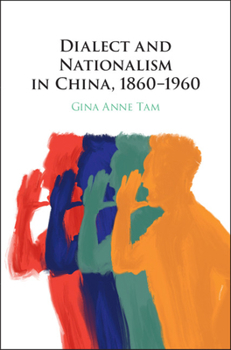
Dialect and Nationalism in China, 1860-1960
No Customer Reviews

Taking aim at the conventional narrative that standard, national languages transform "peasants" into citizens, Gina Anne Tam centers the history of the Chinese nation and national identity on fangyan - languages like Shanghainese, Cantonese, and dozens of others that are categorically different from the Chinese national language, Mandarin. She traces how, on the one hand, linguists, policy-makers, bureaucrats and workaday educators framed fangyan as non-standard "variants" of the Chinese language, subsidiary in symbolic importance to standard Mandarin. She simultaneously highlights, on the other hand, the folksong collectors, playwrights, hip-hop artists and popular protestors who argued that fangyan were more authentic and representative of China's national culture and its history. From the late Qing through the height of the Maoist period, these intertwined visions of the Chinese nation - one spoken in one voice, one spoken in many - interacted and shaped one another, and in the process, shaped the basis for national identity itself.
Format:Hardcover
Language:English
ISBN:110847828X
ISBN13:9781108478281
Release Date:April 2020
Publisher:Cambridge University Press
Length:272 Pages
Weight:1.20 lbs.
Dimensions:0.6" x 5.9" x 8.5"
Related Subjects
HistoryCustomer Reviews
0 rating
Copyright © 2026 Thriftbooks.com
Terms of Use | Privacy Policy | Do Not Sell/Share My Personal Information | Cookie Policy | Cookie Preferences | Accessibility Statement
ThriftBooks ® and the ThriftBooks ® logo are registered trademarks of Thrift Books Global, LLC
ThriftBooks ® and the ThriftBooks ® logo are registered trademarks of Thrift Books Global, LLC
