


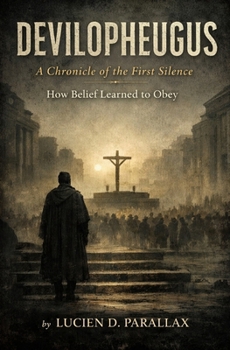
Devilopheugus: A Chronicle of the First Silence

What if the most decisive victory in history was silence-not conquest?
Devilopheugus: A Chronicle of the First Silence is a dark, philosophical historical novel that reimagines a familiar moment from an unfamiliar angle: not through the eyes of a savior or a martyr, but through the mind of the man who ensured the world kept functioning afterward.
When a charismatic teacher threatens to destabilize an already fragile city, Devilopheugus-an administrator, strategist, and master of human systems-sets out not to crush belief, but to contain it. He understands crowds better than armies, memory better than violence, and institutions better than faith itself. What follows is not a riot or an apocalypse, but something far more enduring: order.
Told in spare, cinematic prose, the novel traces how public execution becomes policy, how followers fracture without realizing it, how contradiction dissolves movements more efficiently than force, and how belief-once dangerous-can be made safe through structure, routine, and silence. As gospels are erased, rewritten, and argued into exhaustion, a new institution is born-one that will outlive both the teacher and his executioner.
Threaded through the narrative is a quiet counterweight: the rare individuals who remember incorrectly, whose memories refuse to be useful, and whose persistence threatens nothing-and therefore everything.
This is not a retelling of scripture.
It is a study of power.
Of administration.
Of how meaning is managed.
For readers who enjoy:
Philosophical fiction that challenges sacred narratives
Dark historical reimaginings in the vein of The Master and Margarita, Silence, or The Gospel According to Jesus Christ
Stories about institutions, control, and the mechanics of belief
Villains who never raise their voices-and never need to
Devilopheugus: A Chronicle of the First Silence asks a dangerous question:
What if the world didn't reject hope-but learned how to live without letting it act?
Once silence learns how to work, it never truly leaves.
Customer Reviews
ThriftBooks ® and the ThriftBooks ® logo are registered trademarks of Thrift Books Global, LLC
