


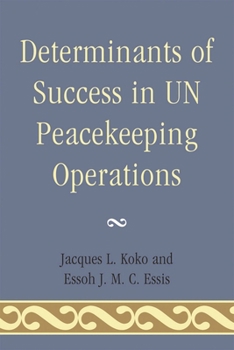
Determinants of Success in UN Peacekeeping Operations
No Customer Reviews

This book examines forty-six UN peacekeeping operations, initiated from 1956 through 2006 to manage cases of intrastate and interstate conflicts, to identify the most significant factors that could help to explain the success or lack of success of such operations. Factor analysis is used to exploit the correlations between independent variables in order to regroup them into a smaller set of factors explaining the success or failure of these operations. The results show that the success of a UN peacekeeping operation can be explained by factors that are related to four categories of variables: i) the scope of resources invested in peacekeeping; ii) the duration and intensity of conflict and time of preparation for peacekeeping intervention; iii) the political support for peacekeeping from the UN Security Council; and iv) the type of conflict.
Format:Paperback
Language:English
ISBN:0761858652
ISBN13:9780761858652
Release Date:June 2012
Publisher:University Press of America
Length:114 Pages
Weight:0.45 lbs.
Dimensions:0.4" x 5.9" x 8.9"
Grade Range:Postsecondary
Customer Reviews
0 rating
Copyright © 2026 Thriftbooks.com
Terms of Use | Privacy Policy | Do Not Sell/Share My Personal Information | Cookie Policy | Cookie Preferences | Accessibility Statement
ThriftBooks ® and the ThriftBooks ® logo are registered trademarks of Thrift Books Global, LLC
ThriftBooks ® and the ThriftBooks ® logo are registered trademarks of Thrift Books Global, LLC
