


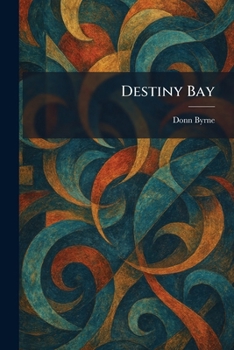
Destiny Bay

"Destiny Bay" is a celebrated masterpiece of Irish romanticism by Donn Byrne. Set against the rugged and beautiful landscape of the Antrim coast in Northern Ireland, the narrative follows the lives, romances, and adventures of the MacFarlane family. This evocative work captures the spirit of a bygone era, blending elements of folklore, equestrian culture, and aristocratic tradition with a deep sense of place.
Through a series of interconnected tales, Byrne portrays the profound connection between the people and their ancestral land, characterized by themes of honor, loyalty, and the enduring power of family legacy. The prose is widely renowned for its lyrical quality and rhythmic beauty, which defines Byrne's unique and influential storytelling style. Readers are introduced to a cast of unforgettable characters, including the wise Sir Valentine and the spirited Jenico, as they navigate a world where destiny is as unpredictable as the surrounding sea. "Destiny Bay" remains a poignant exploration of Irish identity and a testament to the literary artistry of one of Ireland's most beloved early 20th-century voices, offering a nostalgic and enchanting vision of the Emerald Isle.
This work has been selected by scholars as being culturally important, and is part of the knowledge base of civilization as we know it. This work was reproduced from the original artifact, and remains as true to the original work as possible. Therefore, you may see the original copyright references, library stamps (as most of these works have been housed in our most important libraries around the world), and other notations in the work.
This work is in the public domain in the United States of America, and possibly other nations. Within the United States, you may freely copy and distribute this work, as no entity (individual or corporate) has a copyright on the body of the work.
As a reproduction of a historical artifact, this work may contain missing or blurred pages, poor pictures, errant marks, etc. Scholars believe, and we concur, that this work is important enough to be preserved, reproduced, and made generally available to the public. We appreciate your support of the preservation process, and thank you for being an important part of keeping this knowledge alive and relevant.
Customer Reviews
ThriftBooks ® and the ThriftBooks ® logo are registered trademarks of Thrift Books Global, LLC
