


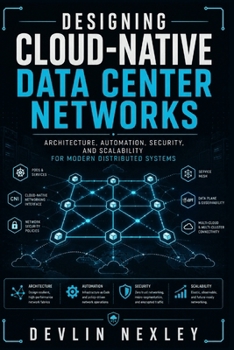
Designing Cloud-Native Data Center Networks

A Complete Guide to Kubernetes Networking, Automation, Security, and Modern Infrastructure Design
Modern infrastructure is no longer built around static networks, manually configured systems, and isolated operational teams. The rise of containers, Kubernetes, microservices, software-defined networking, and distributed cloud platforms has fundamentally transformed how data centers are designed, deployed, secured, and operated.
Cloud-Native Data Center Networking Blueprint provides a comprehensive and practical exploration of the technologies, architectures, and operational models powering today's cloud-native environments. Designed for cloud engineers, network engineers, DevOps professionals, platform engineers, site reliability engineers, and infrastructure architects, this book bridges the gap between traditional networking principles and the realities of modern distributed systems.
Rather than focusing on vendor-specific products or certification objectives, this guide emphasizes vendor-neutral concepts, proven architectural patterns, and real-world implementation strategies that can be applied across private, public, hybrid, and multi-cloud environments.
Inside this book, you will learn how modern networking has evolved to support containerized workloads, Kubernetes-based platforms, service-oriented architectures, and increasingly intelligent infrastructure systems. From foundational networking concepts to advanced topics such as eBPF, service meshes, zero-trust security, network automation, observability, and AI-ready data center design, each chapter builds a deeper understanding of how cloud-native networking operates at scale.
In This Book, You'll Discover:
The architectural evolution from traditional data centers to cloud-native infrastructure
Core principles of modern data center networking, including spine-leaf fabrics, overlays, and software-defined networking
Container networking fundamentals and the networking model of Kubernetes
How Container Network Interface (CNI) frameworks enable scalable cluster communication
Practical approaches to service discovery, traffic management, ingress, and load balancing
Service mesh architectures and secure microservice communication patterns
Zero-trust networking principles for cloud-native environments
The role of eBPF in next-generation networking, observability, and security
Strategies for monitoring, tracing, and troubleshooting distributed systems
Infrastructure as Code, GitOps, and network automation best practices
Multi-cluster, hybrid cloud, and multi-cloud networking architectures
Edge computing and distributed cloud networking considerations
High-performance networking requirements for AI and accelerated computing environments
Reliability, resilience, scalability, and disaster recovery design patterns
Platform engineering, autonomous networking, AIOps, and intent-based infrastructure management
Emerging technologies shaping the future of cloud-native networking
Throughout the book, complex concepts are explained through architectural discussions, practical deployment scenarios, operational insights, and engineering best practices. The focus remains on helping readers understand not only how cloud-native networking technologies work, but also why they matter and how they fit into modern infrastructure ecosystems.
Cloud-native networking is no longer a specialized discipline-it is a foundational capability for modern digital infrastructure. This book will help you understand, design, and operate the networks that power the next generation of cloud-native applications and services.
Customer Reviews
ThriftBooks ® and the ThriftBooks ® logo are registered trademarks of Thrift Books Global, LLC
