


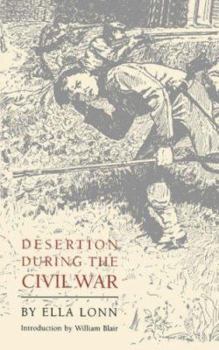
Desertion During the Civil War

Select Format
Select Condition 
Book Overview
Desertion during the Civil War, originally published in 1928, remains the only book-length treatment of its subject. Ella Lonn examines the causes and consequences of desertion from both the Northern and Southern armies. Drawing on official war records, she notes that one in seven enlisted Union soldiers and one in nine Confederate soldiers deserted.
Lonn discusses many reasons for desertion common to both armies, among them lack of such necessities as food, clothing, and equipment; weariness and discouragement; noncommitment and resentment of coercion; and worry about loved ones at home. Some Confederate deserters turned outlaw, joining ruffian bands in the South. Peculiar to the North was the evil of bounty-jumping. Captured deserters generally were not shot or hanged because manpower was so precious. Moving beyond means of dealing with absconders, Lonn considers the effects of their action. Absenteeism from the ranks cost the North victories and prolonged the war even as the South was increasingly hurt by defections. This book makes vivid a human phenomenon produced by a tragic time.
Customer Reviews
ThriftBooks ® and the ThriftBooks ® logo are registered trademarks of Thrift Books Global, LLC
