


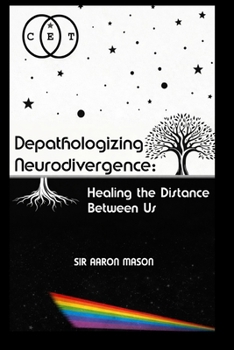
Depathologizing Neurodivergence: Healing the Distance Between Us

Depathologizing Neurodivergence
The helping professions are skilled at naming trauma-just rarely their own, and even more rarely when that trauma lives inside a neurodivergent nervous system.
In Depathologizing Neurodivergence, Sir Aaron Mason offers a bold reframe of trauma, identity, and healing through Cultural Effectiveness Training (C.E.T.)-a nervous-system-informed, trauma-aware meta-framework developed to give language to experiences that often remain unspoken inside therapy rooms, supervision, and professional helping systems.
C.E.T. is not a clinical model and not a replacement for ethical practice. It is a translational framework that crosses disciplines by centering lived experience, nervous systems, culture, and power. Rooted in the author's experience as a neurodivergent clinician, this work names what happens when helpers who process differently are expected to hold others while having nowhere to be held themselves.
Drawing from personal story, clinical insight, and systemic analysis, this book explores how historical trauma, family systems, institutions, and cultural expectations shape neurodivergent lives-and why so many sensitive, perceptive people learn to survive through masking, fragmentation, or self-silencing.
Rather than asking neurodivergent people to adapt to harmful systems, C.E.T. asks a different question:
What would our families, schools, workplaces, and professions look like if they were built for nervous-system safety, belonging, and repair?
This book is written for therapists and helping professionals navigating burnout, fragmentation, and unacknowledged trauma-and for neurodivergent readers seeking validation, context, and language that honors their way of being.
C.E.T. does not offer a label to contain difference.
It offers language to locate it.
Depathologizing Neurodivergence is not about fixing people.
It is about restoring humanity-one nervous system, one relationship, and one culture at a time.
Related Subjects
PsychologyCustomer Reviews
ThriftBooks ® and the ThriftBooks ® logo are registered trademarks of Thrift Books Global, LLC
