


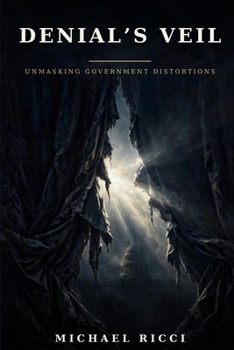
Denial's Veil: Unmasking Government Distortions

Denial is comfortable. Truth asks something of us.
In Denial's Veil, Michael Ricci argues that government power becomes dangerous not through shadowy conspiracies, but through something more ordinary - and more corrosive: opacity, concentrated influence, and public dependence that keep citizens from judging policy for themselves.
Drawing on documented case studies - the 2008 financial crisis and TARP, the NSA's telephone metadata program under Section 215, and the Flint water crisis - Ricci shows how harmful outcomes grow from everyday incentives: the career protected, the warning delayed, the complex rule left unread, the citizen too exhausted to investigate.
This revised edition disciplines outrage with evidence. Where the data are mixed, it says so. Where programs protect the vulnerable, it acknowledges it. And where lawful advocacy is confused with bribery, it draws the line carefully - because exaggerated claims help the very institutions they target.
Denial's Veil is a field manual for becoming harder to deceive: read the records, define the terms, follow the money, and act through lawful civic institutions.
Customer Reviews
ThriftBooks ® and the ThriftBooks ® logo are registered trademarks of Thrift Books Global, LLC
