


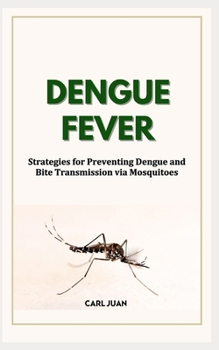
Dengue Fever: Strategies for Preventing Dengue and Bite Transmission via Mosquitoes
No Customer Reviews

The dengue virus, which causes the disease, is spread to people mostly through the bites of infected female mosquitoes, especially the Aedes aegypti mosquito. Especially in tropical and subtropical areas, dengue fever poses a serious threat to public health.
- Dengue can cause mild to severe symptoms, the most common of which are high fever, severe headache, joint and muscular discomfort, rash, and a propensity to bleed. Dengue can cause severe bleeding, low blood pressure, and organ failure in some people, resulting in dengue hemorrhagic fever (DHF) or dengue shock syndrome (DSS).
- Since dengue cannot be cured with an antiviral drug, treatment concentrates on relieving symptoms and preventing complications. In high-risk locations, dengue can be avoided by eliminating breeding grounds for mosquitoes, applying insect repellent, and donning protective clothes.
- Public health programs to educate the public on dengue prevention and early symptom recognition are common components of efforts to limit the disease's distribution. In recent years, dengue vaccinations have been developed as an additional line of defense against the disease, albeit their availability and efficacy may vary by region.
- Dengue can cause mild to severe symptoms, the most common of which are high fever, severe headache, joint and muscular discomfort, rash, and a propensity to bleed. Dengue can cause severe bleeding, low blood pressure, and organ failure in some people, resulting in dengue hemorrhagic fever (DHF) or dengue shock syndrome (DSS).
- Since dengue cannot be cured with an antiviral drug, treatment concentrates on relieving symptoms and preventing complications. In high-risk locations, dengue can be avoided by eliminating breeding grounds for mosquitoes, applying insect repellent, and donning protective clothes.
- Public health programs to educate the public on dengue prevention and early symptom recognition are common components of efforts to limit the disease's distribution. In recent years, dengue vaccinations have been developed as an additional line of defense against the disease, albeit their availability and efficacy may vary by region.
Format:Paperback
Language:English
ISBN:B0CSXGBP4D
ISBN13:9798876916952
Release Date:January 2024
Publisher:Independently Published
Length:64 Pages
Weight:0.16 lbs.
Dimensions:0.1" x 5.0" x 8.0"
Customer Reviews
0 rating
Copyright © 2026 Thriftbooks.com Terms of Use
| Privacy Policy | Do Not
Sell/Share My Personal Information | Cookie Policy | Cookie Preferences | Accessibility Statement
ThriftBooks® and the ThriftBooks® logo are registered trademarks of Thrift Books Global, LLC
ThriftBooks® and the ThriftBooks® logo are registered trademarks of Thrift Books Global, LLC
