


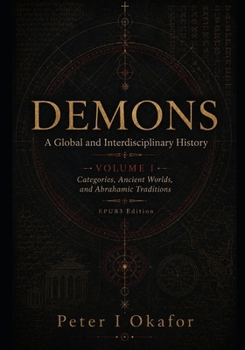
DEMONS: A Global and Interdisciplinary History: Volume I: Categories, Ancient Worlds, and Abrahamic Traditions

Before "demon" became a universal monster-word, it belonged to histories of translation, theology, medicine, ritual, politics, and power.
Volume I establishes the method of DEMONS and follows the category from problems of naming and evidence into the ancient Mediterranean and Near East, then through Jewish, Christian, and Islamic traditions. It examines Mesopotamian affliction and protection, Lamastu and Pazuzu, Egyptian and Levantine worlds, Zoroastrian dualism, Greek daimones and curse tablets, biblical adversaries, the Watchers and Dead Sea Scrolls, early Christian exorcism, monastic discernment, rabbinic shedim, late-antique ritual texts, Qurʾanic jinn, ruqya, possession, and the changing boundaries between angels and demons.
The governing rule is simple but demanding: translation does not prove identity, an unexplained event does not prove a supernatural cause, and an ordinary explanation does not erase the historical or human significance of the experience.
Written as an interdisciplinary history rather than a bestiary, Volume I combines texts, artifacts, ritual evidence, case analysis, and documentary images to show how categories of invisible agency are made-and how easily later readers mistake inherited labels for timeless facts.
Customer Reviews
ThriftBooks ® and the ThriftBooks ® logo are registered trademarks of Thrift Books Global, LLC
