


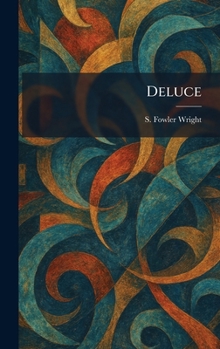
Deluce

"Deluce" is a seminal work of speculative fiction that explores the terrifying consequences of a global cataclysm. Set in a world where a sudden geological shift causes the vast majority of the Earth's landmass to sink beneath the rising oceans, the narrative follows the survivors as they navigate a landscape stripped of modern civilization and its comforts. Central to the story is the struggle of individuals who must contend with the harsh realities of a lawless new world where the survival of the fittest is the only remaining rule.
Through vivid imagery and intense psychological drama, the work examines the breakdown of social hierarchies and the primal instincts that emerge in the face of total destruction. As the remnants of humanity struggle to establish a new order amidst the chaos, the novel probes deep questions about morality, governance, and the endurance of human relationships. Wright's vision of a world transformed into a scattered archipelago remains a haunting and influential depiction of environmental disaster and societal collapse. This classic of early science fiction offers a compelling look at the fragility of our world and the resilience of the human spirit when pushed to the absolute brink.
This work has been selected by scholars as being culturally important, and is part of the knowledge base of civilization as we know it. This work was reproduced from the original artifact, and remains as true to the original work as possible. Therefore, you may see the original copyright references, library stamps (as most of these works have been housed in our most important libraries around the world), and other notations in the work.
This work is in the public domain in the United States of America, and possibly other nations. Within the United States, you may freely copy and distribute this work, as no entity (individual or corporate) has a copyright on the body of the work.
As a reproduction of a historical artifact, this work may contain missing or blurred pages, poor pictures, errant marks, etc. Scholars believe, and we concur, that this work is important enough to be preserved, reproduced, and made generally available to the public. We appreciate your support of the preservation process, and thank you for being an important part of keeping this knowledge alive and relevant.
Customer Reviews
ThriftBooks ® and the ThriftBooks ® logo are registered trademarks of Thrift Books Global, LLC
