


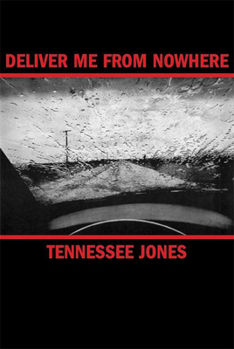
Deliver Me from Nowhere

Based on Bruce Springsteen's 1982 album "Nebraska," Tennessee Jones--who was three years old when the album came out--uses interlinked short stories to explore the changing face of America over the two decades since it's release. From the closing of the auto plants to the coming of age of the GLBT movement, the forces behind American's changing lives find expression in Jones' diverse characters. From the portrait of a man laid off an auto plant--who fantasizes about eating the car he helped build--to the twelve year old boy who watches his father's red-river baptism and understands the connection between work and death, Jones uncompromising visions present a brave new view of the shifting territory between gender and class, power and death. A testament to how rock music and literature influence and borrow from one another, Deliver me from Nowhere is as much influenced by Flannery O'Connor and John Steinbeck as it is by Bruce Springsteen, Johnny Cash, Patti Smith, and traditional gospel hymns. Infused with the urgency of rock n' roll and the restraint of poetry, Tennessee Jones' unforgettable stories manage to extract the thread of religion that runs through the American experience of rock and roll.
Format:Paperback
Language:English
ISBN:193236059X
ISBN13:9781932360592
Release Date:February 2005
Publisher:Catapult
Length:168 Pages
Weight:0.40 lbs.
Dimensions:0.5" x 5.1" x 7.6"
Customer Reviews
1 rating
The Things Forgotten
Published by Thriftbooks.com User , 20 years ago
The characters in DELIVER ME FROM NOWHERE are sick, sick of themselves, sick of the broken promises of America, and sick to death of the violence that pervades our rusty and misshapen air. Based on ten songs by Bruce Springsteen from his 1982 LP Nebraska, these stories depart from Springsteen's lyrics in numerous ways, some of them significant. For example, in "Nebraska" the story the basic outlines of the Starkweather-Fugate murders remain the same, but Jones changes the narrator from Charles Starkweather himself to Caril Ann Fugate--here stripped of a name, as though to signify that in 1950s America women had better hold on to every thing they've got. The killer is called George here . . . for reasons unclear, but it's terribly suggestive. Switching narrative genders, as it were, brings the story back closer to the female-centered (and narrated) film version BADLANDS (1973), directed by Terrence Malick, in which the homicidal pair were called "Kit" and "Holly," another pair of androgynous names. Sissy Spacek played Holly, and spoke the most banal lines while Malick's irony-saturated imagery tore holes into the screen. Jones is equally skilled. His language is stripped down like a fine machine, glistening with oil, but he knows how to rise to the occasion, when only a swatch of the lyric will save the day between tedium and shock. Reading this collection put me in mind of the Faulkner of "Barn Burning" and the crazy, irrational swerves of James Purdy's 50s and 60s storytelling. It seems to me that the stories get better the further away they get from Springsteen's lyrics. In "My Father's House" a farmgirl grows up, transitions and changes from a girl to a man, and returns back home to confront the haunting specter of the father. The boy, now called "Caleb" in sort of a parody of a country name, reflects on the spirit of masculinity that had united the two, father and son, even back in the day when he had passed as a she. Caleb thought the father would recognize and acknowledge this tie--a fatal miscalculation, one born of a wildly frenzied naturalism. "Caleb stared up at his father, blood running fown his chin from a broken nose." The tale just gathers heartbreak like a rolling stone. "This loneliness stretched out and convered him, like the shadows of the clouds he remembered from childhood. A person's heart will pound for the things he thinks he has forgotten." Finally Caleb learns how to live with his own knowledge of his own life, his own times, and the hormones in the needle. "Some experiences," reflects the narrator, :are so far from universal that talking about them makes them seem even smaller." How important the word "seem" in the last-quoted sentence! How important the smallest detail in Jones' triumphantly mournful debut of short fiction.
Copyright © 2026 Thriftbooks.com
Terms of Use | Privacy Policy | Do Not Sell/Share My Personal Information | Cookie Policy | Cookie Preferences | Accessibility Statement
ThriftBooks ® and the ThriftBooks ® logo are registered trademarks of Thrift Books Global, LLC
ThriftBooks ® and the ThriftBooks ® logo are registered trademarks of Thrift Books Global, LLC
