


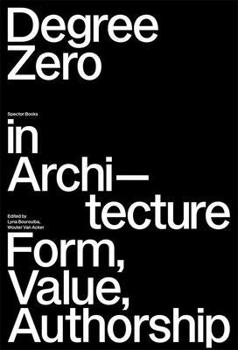
Degree Zero in Architecture: Form, Value, Authorship

Fifteen essays that examine architectural practices through the conceptual framework of Roland Barthes' "degree zero"
Originally borrowed from literary studies, the term "degree zero" has evolved, since the 1960s, into a familiar trope in architectural theory and criticism. First conceptualized in Roland Barthes' seminal book, Le degr z ro de l' criture, as a plain style of writing that liberates text from ideology, it has been deployed as a discursive and conceptual tool for articulating diverse architectural practices--projectual, theoretical, speculative, critical or academic.
Degree Zero in Architecture examines how the idea of degree zero, entangling the notions of form, value and authorship, has catalyzed--and continues to deepen--critical reflections on architectural practices and their formalizations. The 15 essays in this collection interrogate architectural forms and forms of architectural knowledge, examining their positioning in the field based on the set of values they embody and the nature of the forms they shape.
Related Subjects
ArchitectureCustomer Reviews
ThriftBooks ® and the ThriftBooks ® logo are registered trademarks of Thrift Books Global, LLC
