


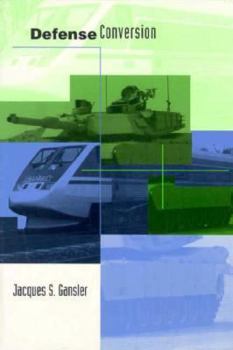
Defense Conversion: Transforming the Arsenal of Democracy

Select Format
Select Condition 
Book Overview
This text examines the need to convert the defence industry from an inefficient and non-competitive part of the US economy to an integrated, civilian/military operation. The author defines the challenges, especially the influence of old-line defence interests and presents examples of restructuring. Gansler discusses growing foreign involvement, lessons of prior industrial conversions, the best structure for the next century, current barriers to integration, a three-part transformation strategy, the role of technological leadership, and the critical workforce. He concludes by outlining sixteen specific actions for achieving civil/military integration.
Format:Hardcover
Language:English
ISBN:0262071665
ISBN13:9780262071666
Release Date:January 1995
Publisher:Mit Pr
Length:256 Pages
Weight:1.34 lbs.
Dimensions:9.3" x 1.0" x 6.5"
Customer Reviews
1 rating
Defense Conversion: A Tough Sell
Published by Thriftbooks.com User , 27 years ago
Dr. Gansler submits that in order to create a responsive and cost-effective defense industrial base to support the XXI force structure there must be revolutionary movement to a civil/military integration. This would mirror the cost cutting and downsizing achieved by the commercial sector in the early nineties. However, this would entail a complete review of the defense industrial base to determine which areas should remain governmental (see GAO report [NSIAD-99-31] Army Industrial Facilities: Workforce Requirements and Related Issues Affecting Depots and Arsenals).The only approved governmental process to privatize the defense base is OMB's A-76 process. Historically, the government agency has proven to be more cost-effective 50% of the time. Gansler's assertion would be received coldly by unions and its congressional allies. An example of the difficulty to reach this integration is the production of a modern day cannon. The Watervliet Arsenal, (a government owned and operated facility) in Watervliet, NY is the sole producer of this commodity in the country. Instead of trying to integrate it into some sort of civilian status would it not be smarter to increase the workload and maintain the skill base.Overall, Gansler provides decisive insight into the workings and relationships of the military/industrial complex. Obviously a must read for anyone involved with defense-related policy.
Copyright © 2026 Thriftbooks.com Terms of Use
| Privacy Policy | Do Not
Sell/Share My Personal Information | Cookie Policy | Cookie Preferences | Accessibility Statement
ThriftBooks® and the ThriftBooks® logo are registered trademarks of Thrift Books Global, LLC
ThriftBooks® and the ThriftBooks® logo are registered trademarks of Thrift Books Global, LLC
