


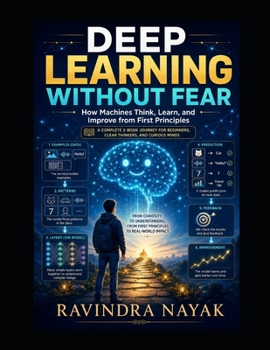
Deep Learning Without Fear: How Machines Think, Learn, and Improve from First Principles

Deep learning sounds complex.
Neural networks, layers, training, data, errors, feedback, models, intelligence - these words can make beginners feel that the subject is only for experts.
But deep learning begins with a simple idea:
A machine improves when it learns from examples, notices patterns, checks mistakes, and adjusts step by step.
Deep Learning Without Fear is a beginner-friendly complete edition created for non-technical readers, students, parents, teachers, professionals, creators, and lifelong learners who want to understand deep learning without fear.
This book does not begin with heavy mathematics or confusing jargon. It begins with first principles: how learning happens, how a machine receives examples, how patterns are discovered, how mistakes become feedback, and how improvement grows over time.
Across three connected books, readers move through a calm and practical journey:
Book 1: How Machines Begin to Think
Understand examples, patterns, signals, decisions, and why machines need data before they can learn.
Book 2: How Machines Learn Deeply
Explore neural networks, layers, training, feedback, mistakes, and improvement in simple everyday language.
Book 3: How Machines Improve and Help the World
Learn how deep learning is used in images, speech, language, recommendations, creativity, automation, and real-world problem solving - with human judgment and responsibility.
Inside this complete edition, readers will learn:
How deep learning works without fear
What neural networks really mean in simple language
Why examples are the experience of a machine
How layers help machines notice deeper patterns
Why mistakes are useful feedback
How models improve step by step
How deep learning is used in daily life
How AI tools should be used wisely
Why human judgment matters more than blind trust
How to think clearly, solve problems better, and improve 1% every day
This book is not only about deep learning.
It is about learning how to think better.
By the end, readers will understand that deep learning is not magic. It is a structured way of learning from examples, improving through feedback, and using patterns to make better decisions.
If deep learning has ever felt too difficult, this book gives you a clear, human, first-principles path forward.
Customer Reviews
ThriftBooks ® and the ThriftBooks ® logo are registered trademarks of Thrift Books Global, LLC
