


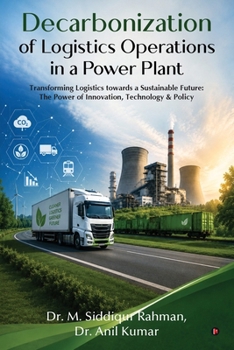
Decarbonization of Logistics Operations in a Power Plant: Transforming Logistics towards a Sustainable Future

This literature investigates the Decarbonization of logistics in India by addressing three key objectives: The first Research Objective (RO1) is to identify major challenges obstructing Decarbonization in the logistics sector. The second Research Objective (RO2) is to evaluate the effectiveness of current Decarbonization strategies. And the third Research Objective (RO3) is to develop a comprehensive framework that integrates the insights of RO1 and RO2 to guide sustainable logistics practices.
A mixed-methods approach was adopted, combining qualitative interviews with logistics professionals and quantitative survey data collected from 150 industry respondents. The quantitative data were analysed using descriptive statistics and regression analysis to uncover significant trends, while thematic analysis was applied to qualitative insights.
The results of RO1 reveal critical challenges such as inadequate infrastructure, limited policy enforcement, and low technological adoption. Under RO2, it was found that although measures such as green vehicle adoption and route optimization tools are being implemented, they lack uniform application and long-term planning.
These findings were synthesized in RO3 to construct a Decarbonization Strategy Framework (DSF), which emphasizes cross-sector collaboration, regulatory reforms, financial incentives, and scalable technologies tailored to the Indian context.
Theoretically, this study contributes to sustainability and logistics management literature by contextualizing Decarbonization within emerging economies and extending current frameworks to reflect real-world complexities. It highlights how practical limitations shape theoretical assumptions, thereby refining sustainability discourse in logistics.
Customer Reviews
ThriftBooks ® and the ThriftBooks ® logo are registered trademarks of Thrift Books Global, LLC
