


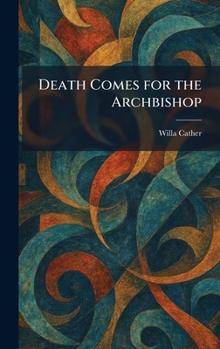
Death Comes for the Archbishop

"Death Comes for the Archbishop" is a masterpiece of American literature that chronicles the life and missionary efforts of Bishop Jean Marie Latour and his faithful companion, Father Joseph Vaillant. Set in the mid-19th century, the narrative follows these two French priests as they navigate the vast and beautiful landscapes of the newly acquired New Mexico Territory. Tasked with establishing a Roman Catholic diocese in a land marked by diverse cultures and ancient traditions, they encounter a complex tapestry of Native American, Mexican, and Spanish influences.
Willa Cather's prose captures the quiet dignity of the desert and the spiritual challenges faced by those who seek to bring order to a rugged frontier. The novel is structured as a series of vivid vignettes that explore themes of faith, solitude, and the enduring human spirit. From the construction of the Cathedral of Saint Francis in Santa Fe to the quiet moments of reflection under the vast Western sky, the work offers a profound meditation on the passage of time and the legacy of a life devoted to service.
This evocative work remains a foundational piece of Western fiction, celebrated for its historical richness and its deep appreciation for the landscape of the American Southwest. It is a timeless exploration of the intersections between culture, religion, and the natural world.
This work has been selected by scholars as being culturally important, and is part of the knowledge base of civilization as we know it. This work was reproduced from the original artifact, and remains as true to the original work as possible. Therefore, you may see the original copyright references, library stamps (as most of these works have been housed in our most important libraries around the world), and other notations in the work.
This work is in the public domain in the United States of America, and possibly other nations. Within the United States, you may freely copy and distribute this work, as no entity (individual or corporate) has a copyright on the body of the work.
As a reproduction of a historical artifact, this work may contain missing or blurred pages, poor pictures, errant marks, etc. Scholars believe, and we concur, that this work is important enough to be preserved, reproduced, and made generally available to the public. We appreciate your support of the preservation process, and thank you for being an important part of keeping this knowledge alive and relevant.
Customer Reviews
ThriftBooks ® and the ThriftBooks ® logo are registered trademarks of Thrift Books Global, LLC
