


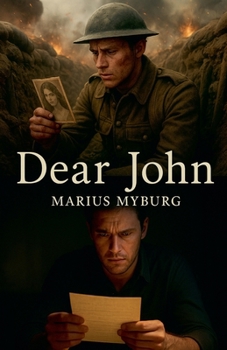
Dear John

When quiet, solitary John Miller opens his mail one ordinary morning, he finds something impossible: a letter postmarked Somerset, 1916, written by a woman named Eleanor to a soldier who shares his first name.
At first, he laughs it off-a clever hoax, maybe a marketing stunt. Then more letters arrive: from a wartime fianc e in 1944 Ohio, a student protester in 1968 California, a mother writing to her son in frozen Korea. Each is heartbreakingly authentic, each addressed to a different "John," each carrying love across decades of war.
As the letters pile up, skepticism gives way to obsession. John begins tracing their origins, chasing ghosts through archives and battlefields, until he uncovers a truth too precise, too human, to dismiss. These aren't fabrications-they're messages from lives cut short, somehow finding him.
Dear John moves between the front lines of history and the loneliness of modern life, weaving love, loss, and the strange persistence of memory into a haunting mystery. It asks whether grief can outlive time-and what happens when the past finally writes back.
Customer Reviews
ThriftBooks® and the ThriftBooks® logo are registered trademarks of Thrift Books Global, LLC
