


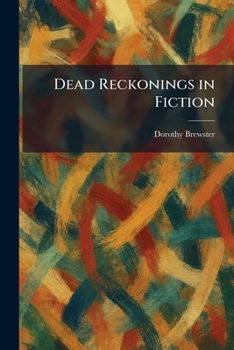
Dead Reckonings in Fiction

Select Format
Select Condition 
Book Overview
"Dead Reckonings in Fiction" is a scholarly and insightful exploration of the modern novel during the early 20th century. Written by the distinguished literary critic Dorothy Brewster, this collection of essays delves into the techniques, themes, and structures of contemporary fiction, offering a "dead reckoning" or a navigation through the complex literary landscape of its era. The work examines the evolving nature of storytelling, character development, and the psychological depth of modern protagonists. Brewster provides a nuanced analysis of the shifts in literary form and the social influences that shaped the literature of her time.
As a piece of critical scholarship, it serves as an essential bridge for understanding the transition between traditional narrative styles and the experimental techniques of the modernist period. Each essay reflects Brewster's deep erudition and her ability to synthesize diverse literary trends into a cohesive narrative about the state of fiction. This volume remains a valuable resource for students of literature, critics, and anyone interested in the historical development of the novel as a primary medium of human expression.
This work has been selected by scholars as being culturally important, and is part of the knowledge base of civilization as we know it. This work was reproduced from the original artifact, and remains as true to the original work as possible. Therefore, you may see the original copyright references, library stamps (as most of these works have been housed in our most important libraries around the world), and other notations in the work.
This work is in the public domain in the United States of America, and possibly other nations. Within the United States, you may freely copy and distribute this work, as no entity (individual or corporate) has a copyright on the body of the work.
As a reproduction of a historical artifact, this work may contain missing or blurred pages, poor pictures, errant marks, etc. Scholars believe, and we concur, that this work is important enough to be preserved, reproduced, and made generally available to the public. We appreciate your support of the preservation process, and thank you for being an important part of keeping this knowledge alive and relevant.
Customer Reviews
ThriftBooks ® and the ThriftBooks ® logo are registered trademarks of Thrift Books Global, LLC
