


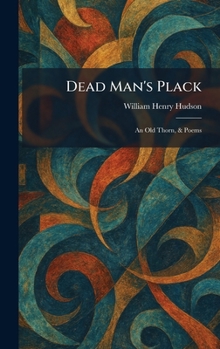
Dead Man's Plack: An Old Thorn, & Poems

"Dead Man's Plack: An Old Thorn, & Poems" is a captivating collection by the renowned author and naturalist W. H. Hudson, blending historical legend, rural folklore, and lyrical verse. The title novella, "Dead Man's Plack," transports readers to the tenth century to recount the dramatic and tragic tale of King Edgar and the beautiful Elfrida. Set against the lush backdrop of the Hampshire forests, it explores themes of beauty, betrayal, and lasting remorse with a haunting, atmospheric narrative style.
In "An Old Thorn," Hudson shifts his focus to the heart of the English countryside, weaving a story rooted in local superstition and the mystical connection between humanity and the natural world. This piece highlights the author's deep affinity for the landscape and its enduring myths. The volume is further enriched by a selection of Hudson's poems, which reflect his keen observations of nature and his mastery of evocative language. Together, these works offer a profound look at Britain's historical and spiritual heritage, showcasing the versatility of one of the early twentieth century's most distinctive literary voices.
This work has been selected by scholars as being culturally important, and is part of the knowledge base of civilization as we know it. This work was reproduced from the original artifact, and remains as true to the original work as possible. Therefore, you may see the original copyright references, library stamps (as most of these works have been housed in our most important libraries around the world), and other notations in the work.
This work is in the public domain in the United States of America, and possibly other nations. Within the United States, you may freely copy and distribute this work, as no entity (individual or corporate) has a copyright on the body of the work.
As a reproduction of a historical artifact, this work may contain missing or blurred pages, poor pictures, errant marks, etc. Scholars believe, and we concur, that this work is important enough to be preserved, reproduced, and made generally available to the public. We appreciate your support of the preservation process, and thank you for being an important part of keeping this knowledge alive and relevant.
Customer Reviews
ThriftBooks ® and the ThriftBooks ® logo are registered trademarks of Thrift Books Global, LLC
