


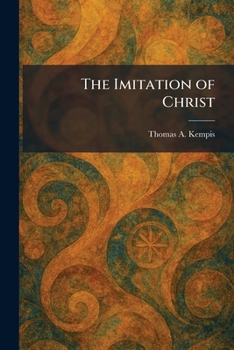
The Imitation of Christ


Select Format
Select Condition 
Book Overview
"The Imitation of Christ" stands as one of the most influential works of Christian devotion ever written. Composed by Thomas Kempis in the 15th century, this timeless classic offers profound guidance on the pursuit of spiritual perfection and the cultivation of an inner life dedicated to following the example of Jesus Christ. Organized into four insightful books, the text provides practical advice on humility, the renunciation of worldly vanities, and the transformative power of the Eucharist. It emphasizes a direct, personal relationship with God, characterized by simplicity, prayer, and the discipline of the heart.
As a cornerstone of the Devotio Moderna movement, this work has transcended its monastic origins to provide solace and inspiration to millions of readers across centuries and denominations. Its brief, meditative chapters are designed for daily reflection, making it an essential companion for those seeking to deepen their faith and navigate the challenges of the external world through internal peace. "The Imitation of Christ" remains a powerful testament to the enduring human quest for spiritual meaning and the quiet strength of a life lived in imitation of the divine.
This work has been selected by scholars as being culturally important, and is part of the knowledge base of civilization as we know it. This work was reproduced from the original artifact, and remains as true to the original work as possible. Therefore, you may see the original copyright references, library stamps (as most of these works have been housed in our most important libraries around the world), and other notations in the work.
This work is in the public domain in the United States of America, and possibly other nations. Within the United States, you may freely copy and distribute this work, as no entity (individual or corporate) has a copyright on the body of the work.
As a reproduction of a historical artifact, this work may contain missing or blurred pages, poor pictures, errant marks, etc. Scholars believe, and we concur, that this work is important enough to be preserved, reproduced, and made generally available to the public. We appreciate your support of the preservation process, and thank you for being an important part of keeping this knowledge alive and relevant.
Customer Reviews
The imitation of Christ
Interior spiritual growth for the courageous seeker
Truly amazing
Best book ever
Packs a punch
Humble beginnings
Medieval Illustrations Set A Certain Tone That Fits This Work
A Classic with Art!
A very important book to Christianity
ThriftBooks® and the ThriftBooks® logo are registered trademarks of Thrift Books Global, LLC
