


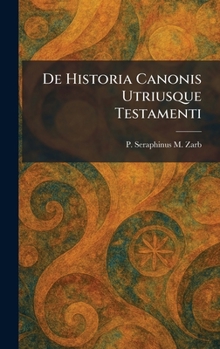
De Historia Canonis Utriusque Testamenti

"De Historia Canonis Utriusque Testamenti" is a scholarly and rigorous examination of the historical formation and formal recognition of the Biblical canon. Authored by the prominent Dominican theologian P. Seraphinus M. Zarb, this work provides a detailed chronological account of how the books of both the Old and New Testaments were compiled and accepted within the Christian tradition.
The text delves into the criteria for canonicity, the role of apostolic tradition, and the definitive pronouncements of early church councils. By analyzing both internal scriptural evidence and the testimonies of the Church Fathers, Zarb offers a comprehensive overview of the development of the sacred library. This work is an invaluable resource for scholars of theology, biblical studies, and history, providing profound insights into the structural and historical foundations of the Bible. Through meticulous research, the author highlights the continuity and authority involved in the preservation of sacred texts, making this an essential volume for understanding the origins of the Christian scriptures.
This work has been selected by scholars as being culturally important, and is part of the knowledge base of civilization as we know it. This work was reproduced from the original artifact, and remains as true to the original work as possible. Therefore, you may see the original copyright references, library stamps (as most of these works have been housed in our most important libraries around the world), and other notations in the work.
This work is in the public domain in the United States of America, and possibly other nations. Within the United States, you may freely copy and distribute this work, as no entity (individual or corporate) has a copyright on the body of the work.
As a reproduction of a historical artifact, this work may contain missing or blurred pages, poor pictures, errant marks, etc. Scholars believe, and we concur, that this work is important enough to be preserved, reproduced, and made generally available to the public. We appreciate your support of the preservation process, and thank you for being an important part of keeping this knowledge alive and relevant.
Customer Reviews
ThriftBooks ® and the ThriftBooks ® logo are registered trademarks of Thrift Books Global, LLC
