


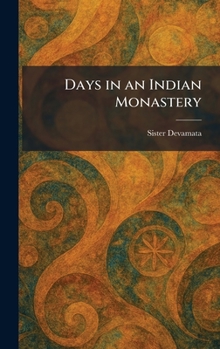
Days in an Indian Monastery

"Days in an Indian Monastery" offers an evocative and intimate portrayal of spiritual life in early 20th-century India. Written by Sister Devamata, an American devotee who lived within the monastic tradition of the Ramakrishna Order, this memoir chronicles her personal experiences and observations during a time of profound cultural and religious exchange. The book delves into the daily rhythms of the monastery, the discipline of the residents, and the timeless wisdom of Vedanta philosophy that guided their actions.
Through vivid descriptions of the landscape, the people, and the sacred rituals she witnessed, Sister Devamata provides readers with a rare glimpse into the heart of Indian monasticism. Her narrative goes beyond mere travelogue, serving as a contemplative study of devotion, simplicity, and the search for spiritual truth. "Days in an Indian Monastery" remains a significant work for those interested in the history of the Vedanta movement in the West, the role of women in spiritual life, and the enduring allure of India's philosophical heritage.
This work has been selected by scholars as being culturally important, and is part of the knowledge base of civilization as we know it. This work was reproduced from the original artifact, and remains as true to the original work as possible. Therefore, you may see the original copyright references, library stamps (as most of these works have been housed in our most important libraries around the world), and other notations in the work.
This work is in the public domain in the United States of America, and possibly other nations. Within the United States, you may freely copy and distribute this work, as no entity (individual or corporate) has a copyright on the body of the work.
As a reproduction of a historical artifact, this work may contain missing or blurred pages, poor pictures, errant marks, etc. Scholars believe, and we concur, that this work is important enough to be preserved, reproduced, and made generally available to the public. We appreciate your support of the preservation process, and thank you for being an important part of keeping this knowledge alive and relevant.
Customer Reviews
ThriftBooks ® and the ThriftBooks ® logo are registered trademarks of Thrift Books Global, LLC
