


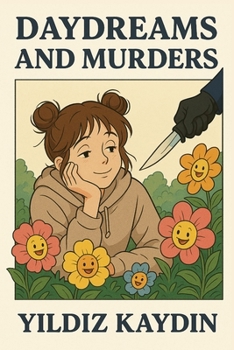
Daydreams and Murders

Set firmly in contemporary **Britain**, the story unfolds with a distinctly dry, self-aware humour-where awkward silences last too long, politeness masks emotional devastation, and catastrophe is met with a shrug and a sarcastic aside. Piper's inner world is rich, cinematic, and constantly drifting: she daydreams her way through dull days, reimagining her life as a series of films she almost stars in. Music becomes a lifeline and a narrator in its own right, sound tracking her mornings, her fantasies, and her spirals-each song offering a temporary escape or a brutal reminder of who she wishes she were. Film references seep into her thoughts as she frames her existence through scenes, close-ups, and imaginary montages, blurring the line between reality and fantasy in a way that's both funny and quietly heart breaking.
As Piper begins to tentatively step outside her self-imposed isolation-through therapy that's more uncomfortable than enlightening, friendships that form in unexpected places, and an attraction she doesn't quite trust-the tone balances sharp comedy with an undercurrent of unease. The mundanity of British suburbia contrasts starkly with the growing threat of violence nearby, creating a sense that something is always slightly off. The danger doesn't announce itself loudly; it lingers in the background, creeping into everyday routines, conversations, and moments that should feel safe.
This is a dark comedy about late blooming and feeling left behind, about desire that's tangled with shame, and hope that arrives awkwardly rather than triumphantly. It explores how fantasy can be both a refuge and a trap, how humour becomes armour, and how growing up doesn't always look like progress. With its blend of bleak wit, pop culture obsession, romantic yearning, and sudden brutality, the story captures the strange absurdity of trying to find yourself while the world feels quietly hostile-and occasionally murderous.
Customer Reviews
ThriftBooks® and the ThriftBooks® logo are registered trademarks of Thrift Books Global, LLC
