


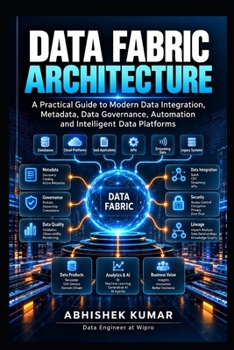
Data Fabric Architecture: A Practical Guide to Modern Data Integration, Metadata, Data Governance, Automation and Intelligent Data Platforms (Data Engineering Domain For professional)

Data is no longer confined to a single database, warehouse, or cloud platform.
Modern organizations operate across databases, SaaS applications, APIs, data lakes, lakehouses, warehouses, streaming platforms, legacy systems, and increasingly AI applications. Connecting these systems is only one part of the challenge. Organizations must also understand, govern, secure, monitor, discover, and automate their data.
Data Fabric Architecture provides a practical guide to designing modern, connected, metadata-driven and intelligent data ecosystems.
The book explains Data Fabric architecture from foundational concepts through production implementation, with practical architecture patterns, examples, diagrams, SQL examples, checklists, and real-world scenarios.
You will learn how to: Understand Data Fabric architecture and its core principlesDesign integration architectures using batch, APIs, CDC and streamingBuild metadata-driven data platformsUse metadata for discovery, governance and automationUnderstand knowledge graphs and data relationshipsImplement data governance across distributed environmentsDesign data quality and observability capabilitiesBuild lineage and perform impact analysisApply security, privacy and zero-trust principlesDesign Data Fabric architectures across cloud and hybrid environmentsBuild governed and reusable data productsEnable self-service data consumptionAutomate repetitive data-management operationsApply AI-assisted capabilities to modern data platformsDesign production-ready Data Fabric architecturesUnderstand the relationship between Data Fabric, Data Mesh, Data Lakehouse and Data WarehousePrepare data platforms for generative AI, RAG and AI agentsUnderstand the future direction of intelligent data architectureThis book is designed for data engineers, data architects, cloud engineers, analytics engineers, AI engineers, platform engineers, and professionals building modern enterprise data platforms.
Rather than focusing on one specific vendor, the book emphasizes architecture principles, patterns, design decisions, operational practices, and practical implementation concepts that can be applied across modern data environments.
Customer Reviews
ThriftBooks ® and the ThriftBooks ® logo are registered trademarks of Thrift Books Global, LLC
